
Table of Contents
Introduction

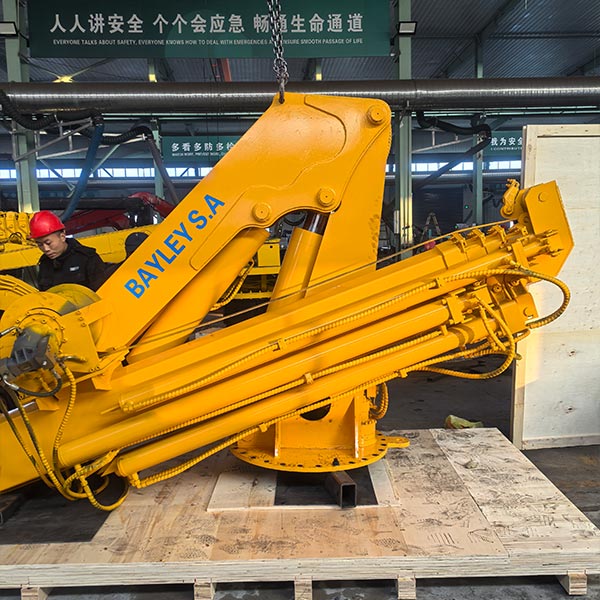
Knuckle boom cranes are versatile lifting machines widely used in construction, industrial, and logistics projects. Unlike traditional telescopic cranes, these cranes feature a multi-jointed boom that provides enhanced flexibility and precision. As a manufacturer of high-quality knuckle boom cranes, we ensure our equipment combines advanced hydraulic systems, robust design, and user-friendly operation to meet the demands of modern work sites.
Understanding the differences between knuckle boom cranes and other crane types is crucial for operators and contractors. These cranes offer better maneuverability in tight spaces, reduced footprint on job sites, and the ability to handle complex lifting operations with ease. They have become essential in industries ranging from construction to forestry and logistics.
Main Features of Knuckle Boom Cranes
Knuckle boom cranes come equipped with several features that make them efficient and reliable:
- Hydraulic Systems and Lifting Capabilities: Our cranes are equipped with advanced hydraulic systems that provide smooth and precise movements. High lifting capacity ensures they can handle heavy loads safely.
- Compact Design for Tight Spaces: The folding boom design allows cranes to operate in confined areas, making them ideal for urban construction sites and narrow roads.
- Safety Features and Operator Comfort: Safety is paramount. Our cranes include overload protection, emergency stop systems, and ergonomic operator cabins.
- Accessories and Attachments: From hydraulic winches to grapples, a range of attachments increases the crane’s versatility, allowing users to adapt to different tasks efficiently.
Applications of Knuckle Boom Cranes

Knuckle boom cranes are used in diverse applications:
- Construction Sites and Infrastructure Projects: Ideal for lifting building materials, pipes, and precast structures.
- Forestry and Heavy Material Handling: Efficient in loading timber, steel, and other industrial materials.
- Truck-Mounted and Mobile Use Cases: Perfect for mobile lifting operations, especially in logistics and urban deliveries.
Advantages of Using Knuckle Boom Cranes
There are several benefits to choosing a knuckle boom crane:
- Increased Efficiency and Productivity: Multi-jointed booms reduce the need for repositioning, speeding up operations.
- Versatility Across Industries: From construction to industrial material handling, these cranes adapt to different tasks seamlessly.
- Lower Operational Costs Compared to Other Cranes: Reduced fuel consumption, easier transportation, and less ground preparation contribute to cost savings.
How to Choose the Right Knuckle Boom Crane
Selecting the ideal crane depends on your specific needs:
- Evaluating Lifting Capacity and Reach: Choose a crane based on maximum load and working radius required for your operations.
- New vs Used Knuckle Boom Cranes: While new cranes offer warranty and latest technology, certified used cranes can be cost-effective.
- Considering Manufacturer Reputation and Support: Reliable manufacturers provide after-sales support, spare parts availability, and customization options.
Maintenance and Safety Tips

Proper maintenance ensures longevity and safety:
- Routine Inspections and Preventive Maintenance: Regular checks of hydraulic systems, cables, and structural components prevent breakdowns.
- Common Safety Practices for Operators: Training on safe load handling, operating controls, and emergency procedures is crucial.
- Troubleshooting Basic Issues: Identifying minor mechanical or hydraulic issues early can prevent costly repairs.
Knuckle Boom Crane Market Insights
To help buyers and operators, here is a comparison of common knuckle boom crane sizes and lifting capacities:
| Crane Model | Lifting Capacity | Maximum Reach | Suitable Applications |
|---|---|---|---|
| Mini Knuckle Boom Crane | 1-3 tons | 5-7 meters | Urban sites, small construction |
| Medium Knuckle Boom Crane | 5-12 tons | 10-15 meters | Industrial sites, forestry |
| Heavy Knuckle Boom Crane | 15-25 tons | 20-25 meters | Large construction, logistics |
Understanding market trends helps in selecting the crane that matches your budget and project requirements. Prices, rental options, and additional features vary by manufacturer and model.
Buying Guide for Manufacturers and Contractors

As a manufacturer, we emphasize quality, customization, and customer support:
- Finding a Reliable Supplier or Manufacturer: Choose suppliers with proven engineering expertise and global service network.
- Custom Options and OEM Capabilities: Many projects require specialized attachments, custom lifting capacities, or truck mounting configurations.
- Financing, Warranty, and After-Sales Support: Long-term support ensures minimal downtime and continued productivity.
Conclusion
Knuckle boom cranes are a versatile, efficient, and safe solution for modern lifting operations. As a manufacturer, our focus is to provide high-quality cranes with advanced features, reliable performance, and excellent customer support. Whether for construction, forestry, or industrial applications, selecting the right crane ensures productivity, safety, and long-term value.
For contractors, businesses, or operators looking to invest in knuckle boom cranes, understanding the features, applications, and market trends is essential. Contact us today to explore our range of knuckle boom cranes, request a quote, or discuss custom solutions tailored to your needs.
FAQ
Q1: How much weight can a knuckle boom crane lift?
A: Depending on the model, lifting capacity ranges from 1 ton for mini cranes up to 25 tons for heavy-duty models.
Q2: Can it operate in tight urban construction sites?
A: Yes, the folding boom design allows operation in narrow spaces, making it ideal for city projects.
Q3: What are the maintenance costs and service intervals?
A: Routine maintenance includes hydraulic system checks, lubrication, and safety inspections, usually scheduled every 250-500 operating hours.
 English
  Russian
  French
  Spanish
  Arabic