

Table of Contents
Introduction

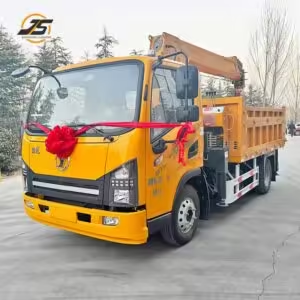
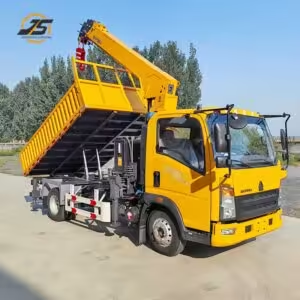
Mobile cranes are essential machines in modern construction, logistics, and infrastructure projects. Unlike stationary cranes, mobile cranes offer mobility, allowing operators to transport the crane from one site to another with minimal effort. Essentially, a mobile crane combines the flexibility of a heavy-duty truck with the lifting capability of a crane, making it ideal for lifting, transporting, and positioning heavy loads efficiently.
Mobile cranes have evolved significantly over the past decades. Early models were manually operated and limited in lifting capacity, but modern truck cranes now feature advanced hydraulic systems, telescopic booms, and automated safety controls. According to industry reports, hydraulic mobile cranes can lift up to 100 tons, demonstrating their capability to handle even the most demanding construction tasks.
Types of Truck Cranes
Mobile cranes come in a variety of designs, each optimized for specific tasks and project requirements. Understanding the main types can help you select the right crane for your needs.
Hydraulic Truck Cranes: These use hydraulic fluid to power the crane’s lifting and extension mechanisms. They are known for smooth operation and precise load control.
Telescopic Boom Truck Cranes: Featuring a boom that extends in sections, these cranes provide adjustable reach and height. They are ideal for projects requiring versatility in lifting positions.
Mini Truck Cranes: Compact in size, mini truck cranes are perfect for small sites, narrow spaces, or indoor lifting operations where larger cranes cannot fit.
All-Terrain Truck Cranes: Designed for off-road mobility, these cranes combine truck chassis strength with crane functionality, allowing access to challenging terrains without additional transport equipment.
| Type of Truck Crane | Typical Lifting Capacity | Best Use Case |
|---|---|---|
| Hydraulic Truck Crane | 20–100 tons | Standard construction lifting |
| Telescopic Boom Truck Crane | 15–80 tons | Projects needing variable reach |
| Mini Truck Crane | 1–15 tons | Confined spaces, small-scale sites |
| All-Terrain Truck Crane | 30–120 tons | Rough terrain and heavy industrial use |
This table helps you compare the capacities and applications of different truck cranes, making it easier to select the right option for your project.
Key Components of a Truck Crane
Understanding the main components of a mobile crane is crucial for safe and efficient operation:
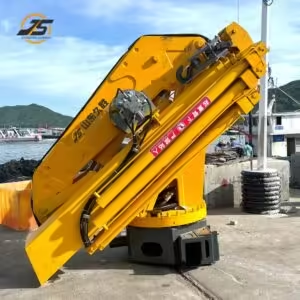
Crane Boom and Jib: The boom provides the primary lifting arm, while the jib extends the reach and versatility.
Hydraulic System: Modern mobile cranes rely on hydraulic cylinders and pumps to lift and extend the boom, offering smoother and more controlled operation.
Outriggers and Stabilizers: These extendable supports prevent the crane from tipping during heavy lifts, ensuring stability.
Operator Cabin and Controls: The cabin houses the controls and monitoring systems, allowing the operator to manage load weight, boom angle, and lifting speed accurately.
Hook, Winch, and Lifting Gear: These components handle the attachment and movement of loads, enabling precise placement and secure lifting.
How Truck Cranes Work
Operating a mobile crane involves a combination of mechanical leverage, hydraulic power, and operator skill. When you start a lift, the operator positions the outriggers to stabilize the truck. The hydraulic system powers the boom extension and rotation, while the winch or hook lifts the load.
Calculating the load capacity is essential to prevent overloading. Each crane comes with a load chart specifying safe lifting limits at various boom lengths and angles. For example, extending a boom fully reduces the maximum safe load due to leverage and balance constraints. According to engineering data from crane manufacturers, exceeding the load capacity by even 10% significantly increases the risk of tipping or structural failure.
Modern mobile cranes often include automated safety features such as overload sensors, anti-two-block devices, and boom angle indicators. These systems not only protect the equipment but also enhance operational safety for personnel on the site.
Applications of Truck Cranes
Mobile cranes are highly versatile and are used across multiple industries:
Construction Projects: Lifting steel beams, concrete panels, and other heavy construction materials.
Logistics and Cargo Handling: Moving containers, machinery, and other large goods within warehouses or shipping terminals.
Infrastructure and Road Projects: Installing bridges, street lights, and traffic signal poles.
Industrial Maintenance and Assembly: Lifting heavy equipment for maintenance, repairs, or factory assembly lines.
Safety Guidelines and Maintenance Tips
Operating a mobile crane safely requires both knowledge and attention to detail. Here are key safety and maintenance practices:
Pre-Operation Safety Checks: Inspect the hydraulic system, boom, hook, tires, and outriggers before each operation.
Common Operational Hazards: Be aware of unstable ground, high winds, and overhead obstacles.
Routine Maintenance Schedule: Hydraulic fluid replacement, cable inspection, and lubrication should follow the manufacturer’s guidelines.
Preventive Measures for Accidents: Use load charts, train operators properly, and employ warning signals for nearby personnel.
Buying, Renting, and Choosing the Right Truck Crane
Selecting the right mobile crane depends on project size, lifting requirements, and budget. New cranes offer advanced technology and reliability, while used cranes can provide cost savings if inspected carefully. Renting a truck crane can be a flexible solution for short-term projects.
When evaluating options, consider the following:
- Maximum lifting capacity
- Boom reach and extension type
- Terrain and mobility requirements
- Brand reputation and after-sales service
By analyzing these factors, you can make an informed decision and avoid unnecessary costs or operational challenges.
Truck Crane Innovations and Future Trends


Mobile cranes are continuously evolving with technological advances:
Modern Hydraulic and Telescopic Technology: Improved cylinders and materials allow smoother operation and higher lifting capacities.
Smart Safety Systems: Sensors and digital load monitoring systems are becoming standard, reducing human error.
Eco-Friendly and Electric Truck Cranes: Electric and hybrid models are emerging, lowering emissions and operational costs.
Emerging Applications: Urban construction and modular building projects increasingly rely on compact, high-capacity truck cranes to enhance efficiency.
Conclusion
Mobile cranes are indispensable tools for lifting and transporting heavy loads across industries. Understanding their types, components, and operational principles ensures safe and efficient use. By following proper safety guidelines, conducting regular maintenance, and selecting the right crane for your project, you can maximize productivity while minimizing risk. Whether you are managing a small construction site or a large-scale infrastructure project, truck cranes provide the flexibility and power needed to get the job done effectively.
FAQ
What is a truck crane?
A mobile crane is a versatile, mobile lifting machine mounted on a truck chassis, designed to transport, lift, and precisely place heavy loads on construction sites, industrial facilities, or logistics operations. Its mobility allows operators to move the crane between different job sites efficiently, making it an essential tool for a wide range of heavy-duty lifting tasks.
How does a mobile crane work?
Truck cranes operate using hydraulic systems that power the boom and lifting mechanism, enabling smooth and controlled movement of heavy loads. Outriggers extend to stabilize the crane during lifting, while the boom can rotate, extend, or retract to reach the desired height. Operators use load charts and monitoring systems to ensure safe and efficient lifts.
What types of mobile cranes are available?
There are several types of mobile cranes, each designed for specific lifting tasks. Hydraulic mobile cranes provide smooth and precise lifting, telescopic boom cranes allow adjustable reach, mini mobile cranes are ideal for confined spaces, and all-terrain truck cranes can navigate rough or uneven surfaces while handling large loads, offering flexibility across various industries.
What is the lifting capacity of a mobile crane?
Truck crane lifting capacity varies widely depending on the type and model. Mini mobile cranes can lift around 1–15 tons, standard hydraulic models handle 20–100 tons, and large all-terrain cranes can lift over 100 tons. Capacity is affected by boom length, angle, and load distribution, so operators must always follow manufacturer load charts to ensure safety.
How can I safely operate a truck crane?
Safe operation of a mobile crane requires proper setup, including fully deploying outriggers and stabilizers. Operators should follow load charts, conduct pre-operation inspections, and use built-in safety systems such as overload sensors and angle indicators. Training, adherence to safety guidelines, and awareness of environmental conditions are critical to prevent accidents and equipment damage.
Need Help Choosing the Right Truck Crane?
If you’re unsure which mobile crane is best for your project or lifting needs, our experts are here to guide you. Contact us today for a personalized consultation, and ensure your operations are safe, efficient, and productive. Don’t wait to optimize your workflow—get in touch now to select the perfect mobile crane for your site!
 English
  Russian
  French
  Spanish
  Arabic