

Table of Contents
Articulated boom lifts are essential machines in construction, industrial maintenance, and logistics operations. They combine the flexibility of a crane with the reach of a lift, allowing operators to access hard-to-reach areas safely and efficiently. If you are new to this equipment, understanding how an articulating boom lift works, its key components, types, and applications will help you make better operational or purchasing decisions.
Introduction

An articulated boom lift is a mobile aerial work platform with a series of hinged sections (booms) that allow it to extend both vertically and horizontally. Unlike telescopic boom lifts that move in a straight line, articulated boom lifts can maneuver around obstacles, making them ideal for indoor or cluttered worksites. Operators can position personnel or materials at elevated heights with precision, thanks to advanced hydraulic controls and stabilization systems.
These machines are widely used for maintenance, construction, warehouse management, and industrial installation tasks. According to an industrial equipment survey (Equipment World, 2023), over 60% of modern worksites utilize articulated boom lifts due to their versatility and safety features.
Key Components of an Articulating Boom Lift
Understanding the main components helps you operate or select the right machine:
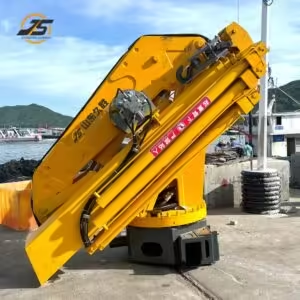
- Boom Sections and Joints: Hinged arms that allow vertical and horizontal reach.
- Hydraulic System: Powers the movement of the booms, ensuring smooth lifting and articulation.
- Operator Cabin and Controls: Houses the driver and control interface for precise maneuvering.
- Outriggers/Stabilizers: Extendable supports that provide stability during operation.
- Platform or Fork Attachment: Where personnel or materials are positioned; designed with safety rails and load limits.
Types of Articulating Boom Lifts
Articulated boom lifts come in various configurations to suit different projects:
- Electric Models: Quiet, emissions-free, ideal for indoor use.
- Diesel Models: Higher lifting capacity and better for outdoor terrains.
- Mini or Compact Models: Navigate tight spaces and smaller worksites.
- Heavy-Duty Industrial Models: Can lift larger loads and reach greater heights.
- All-Terrain Models: Equipped for uneven or rugged surfaces.
How an Articulating Boom Lift Works
The operation relies on hydraulic cylinders and pivoting joints. When the operator activates the controls, hydraulic fluid is pressurized to extend or retract boom sections. The platform moves along multiple axes, allowing precise positioning over obstacles.
Outriggers or stabilizers must be fully deployed before lifting, ensuring balance and preventing tipping. Modern articulating boom lifts also include sensors that alert operators to overload or unsafe angles, reducing the risk of accidents.
Lifting Capacity and Reach
Lifting capacity varies significantly based on model and boom configuration. The following table summarizes typical specifications:
| Model Type | Max Lifting Capacity | Max Working Height | Max Horizontal Reach | Power Source |
|---|---|---|---|---|
| Mini Electric Boom Lift | 1,000 lbs | 30 ft | 15 ft | Electric |
| Standard Articulating Boom | 2,500 lbs | 50 ft | 30 ft | Diesel/Electric |
| Heavy-Duty Industrial Lift | 5,000 lbs | 80 ft | 45 ft | Diesel |
| All-Terrain Articulating Lift | 6,000 lbs | 100 ft | 50 ft | Diesel |
These figures highlight how models differ, allowing operators to select equipment based on load weight, reach requirements, and worksite conditions.
Applications of Articulating Boom Lifts
Articulating boom lifts are versatile tools:
- Construction: Installing overhead structures, placing materials, and ceiling work.
- Warehouse & Industrial: Maintenance of high shelves, machine installation, and inspection.
- Maintenance & Repair: Reaching elevated surfaces, electrical or HVAC systems.
- Indoor vs Outdoor Use: Electric models are suited for indoor applications, while diesel-powered models handle outdoor conditions and rough terrain.
Safety Guidelines and Best Practices
Operating an articulating boom lift safely requires attention to detail:
- Conduct pre-operation inspections of hydraulic systems, tires, and controls.
- Ensure outriggers are fully deployed and positioned on stable ground.
- Follow load charts to avoid exceeding lifting capacity.
- Train operators on hazards such as tip-over, entrapment, or falling objects.
- Schedule regular maintenance to prevent mechanical failures.
According to safety studies (OSHA Aerial Lift Safety Data, 2022), proper training and maintenance reduce accidents by more than 70% on worksites using boom lifts.
Buying or Renting an Articulating Boom Lift
When deciding between buying or renting, consider the following:
- Project Duration: Short-term projects often benefit from rental models.
- Budget: Used or compact lifts can reduce upfront costs.
- Application Requirements: Indoor vs outdoor, height, and weight considerations.
- Supplier Reliability: Choose dealers with certified maintenance and safety checks.
Selecting the right model ensures efficiency, safety, and ROI for your operation.
Innovations and Future Trends


The articulating boom lift industry is evolving:
- Electric and hybrid lifts reduce emissions and noise levels.
- Smart sensors and automated controls improve operational safety and precision.
- Compact models allow access to tight or congested spaces.
- Integration with industrial automation and warehouse management systems enhances efficiency.
These innovations make articulating boom lifts indispensable tools for modern worksites.
Conclusion
This comprehensive guide provides practical insights into articulating boom lifts, helping beginners, operators, and buyers make informed decisions. Understanding the mechanics, safety standards, applications, and emerging technologies ensures you select the right equipment for your worksite.
FAQ
What is an articulating boom lift?
An articulating boom lift is a mobile aerial work platform with hinged sections that allow vertical and horizontal extension. It is designed to lift personnel or materials safely to hard-to-reach areas, ideal for construction, maintenance, and industrial projects.
How does an articulating boom lift work?
Articulating boom lifts operate via hydraulic cylinders that extend and pivot the boom sections. Outriggers stabilize the machine, while controls allow precise positioning. Safety sensors prevent overload and tipping during operation.
What types of articulating boom lifts are available?
Common types include electric models for indoor use, diesel models for outdoor projects, compact mini lifts for tight spaces, heavy-duty industrial lifts, and all-terrain models for rough surfaces, each suited to specific applications.
What is the lifting capacity of an articulating boom lift?
Lifting capacity varies by model, from around 1,000 lbs for mini lifts to over 6,000 lbs for heavy-duty or all-terrain lifts. Capacity depends on boom length, extension, angle, and weight distribution on the platform.
How can I safely operate an articulating boom lift?
Safe operation includes fully deploying outriggers, checking load charts, performing pre-use inspections, and following manufacturer guidelines. Modern lifts often include safety alarms and angle indicators to prevent accidents.
Need Help Choosing the Right Articulating Boom Lift?
If you’re unsure which articulating boom lift is best for your project or worksite, our experts are here to guide you. Contact us today for a personalized consultation, and ensure your team works safely and efficiently. Don’t wait until it’s too late—get in touch now to maximize productivity and safety!
 English
  Russian
  French
  Spanish
  Arabic