
Table of Contents
Introduction

Operating a 4 wheel forklift is an essential skill in warehouses, construction sites, and industrial facilities. These versatile machines help move heavy loads efficiently, but improper handling can lead to accidents, equipment damage, and lost productivity. Following proper safety guidelines ensures both operators and personnel around the forklift remain protected while maintaining smooth workflow.
Understanding the 4 Wheel Forklift
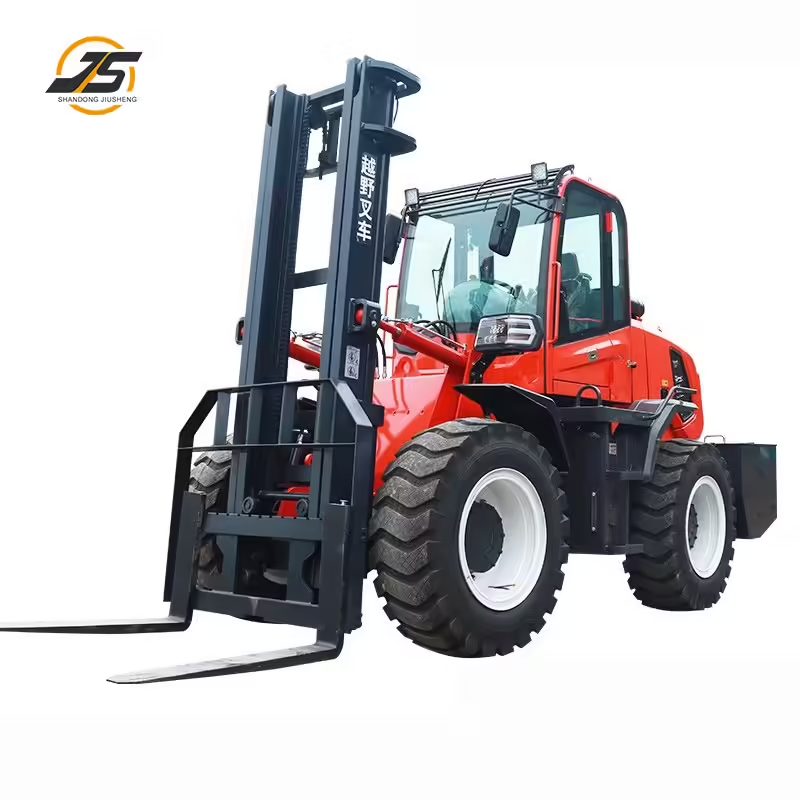
A 4 wheel forklift is designed with four wheels for stability and balance, making it ideal for carrying heavy loads over flat or uneven surfaces. Unlike three-wheel forklifts, 4 wheel forklifts provide enhanced stability, higher load capacities, and smoother maneuverability. They are widely used in warehouses, logistics centers, and manufacturing plants for lifting, stacking, and transporting pallets and materials.
Pre-Operation Safety Checks
Before starting a 4 wheel forklift, operators should conduct thorough inspections:
- Tires: Check for proper inflation and visible damage.
- Brakes: Test service and parking brakes to ensure responsiveness.
- Hydraulics: Inspect hoses, cylinders, and fluid levels.
- Forks and Mast: Ensure no cracks or bending.
- Lights and Horns: Verify functionality for safe communication.
Regular pre-operation checks prevent mechanical failures that could lead to accidents.
Load Handling Best Practices
Proper handling of loads is critical for 4 wheel forklift safety:
- Know the Load Capacity: Never exceed the manufacturer’s rated lifting capacity.
- Center the Load: Position the load evenly on the forks to maintain balance.
- Use Fork Extensions When Needed: Ensure longer or oversized loads are supported.
- Tilt the Mast Correctly: Keep the load stable while lifting, lowering, or traveling.
Following these practices reduces the risk of tip-overs and load loss.
Safe Driving Techniques
Driving a 4 wheel forklift requires attention and control:
- Maintain a Safe Speed: Avoid sharp turns at high speeds.
- Observe Traffic Rules: Follow warehouse or site-specific driving guidelines.
- Keep a Clear Path: Ensure walkways and aisles are free of obstacles.
- Use Seat Belts: Always buckle up to prevent injuries during sudden stops or tip-overs.
Safe driving protects both operators and surrounding personnel.
Working on Inclines and Ramps
Special precautions are needed when operating a 4 wheel forklift on slopes:
- Travel Slowly: Control speed to prevent tipping.
- Drive Straight: Avoid diagonal movements when ascending or descending ramps.
- Load Orientation: Keep the load uphill for stability.
Improper handling on inclines is a leading cause of forklift accidents.
Proper Parking Procedures
Proper parking ensures safety during non-operation periods:
- Lower Forks to the Floor: Prevents tripping hazards and potential injuries.
- Set Parking Brake: Keeps the forklift stationary.
- Turn Off the Engine: Reduces fire hazards and prevents unauthorized use.
Consistent parking habits maintain a safe environment for all employees.
Common Hazards and How to Avoid Them
Being aware of common hazards can prevent incidents:
- Tip-Overs: Occur due to excessive speed, unbalanced loads, or sharp turns.
- Pedestrian Collisions: Ensure designated walkways and awareness of personnel.
- Load Falls: Use correct stacking techniques and secure loads properly.
Addressing these hazards proactively enhances workplace safety.
Maintenance Checklist for 4 Wheel Forklift
| Component | Daily Check | Weekly/Monthly Maintenance |
|---|---|---|
| Brakes | Inspect for responsiveness | Adjust or replace pads as needed |
| Tires | Check for wear, pressure | Rotate or replace if worn |
| Forks | Inspect for cracks or bending | Lubricate moving parts |
| Hydraulic System | Check for leaks | Replace fluid, inspect hoses |
| Lights & Alarms | Test all signals | Replace bulbs or malfunctioning alarms |
| Steering & Controls | Test responsiveness | Lubricate linkages, check alignment |
| Load Handling | Verify load limits | Inspect chains, hooks, and lifting mechanism |
This table provides a structured approach to ensure that every 4 wheel forklift stays in optimal condition, helping operators work safely and efficiently.
Maintenance and Training Requirements


Regular maintenance and proper training are essential for safe forklift operations:
- Scheduled Maintenance: Follow the manufacturer’s service intervals for oil changes, brake inspections, and hydraulic system checks.
- Operator Training: Ensure all operators complete certified training programs and understand site-specific rules.
- Record Keeping: Maintain inspection logs and incident reports for safety audits.
A combination of maintenance and training maximizes both equipment lifespan and operator safety.
Conclusion
In summary, following proper 4 wheel forklift safety guidelines is crucial for any operation, whether indoors or outdoors. Consistent maintenance, adherence to load limits, and operator training ensure efficiency, reduce accident risks, and extend the lifespan of your forklift. By implementing these practices, businesses can maintain safe, reliable, and productive material handling operations. Remember, safety is not just a compliance requirement—it’s a core investment in your team and equipment.
FAQ
What is a 4 wheel forklift used for?
A 4 wheel forklift is designed to lift, move, and stack heavy materials in warehouses, factories, and construction sites. Its four-wheel design provides stability and balance, allowing safe transportation of pallets and bulky items across flat or slightly uneven surfaces.
How is a 4 wheel forklift different from a 3 wheel forklift?
Unlike a 3 wheel forklift, a 4 wheel forklift has two front and two rear wheels, offering greater stability and higher load capacity. While 3 wheel forklifts excel in tight spaces, 4 wheel models are better for heavier loads and outdoor operations on uneven or rough terrain.
How often should a 4 wheel forklift be maintained?
Daily pre-operation checks are essential, including inspecting brakes, tires, forks, hydraulics, and lights. Routine weekly and monthly maintenance, such as oil changes and hydraulic inspections, ensures safe operation and extends the forklift’s lifespan.
What safety features are important on a 4 wheel forklift?
Important safety features include seat belts, load limit indicators, anti-tip systems, warning lights, and horns. Proper use of these features, combined with operator training, reduces accident risk and ensures safe operation around personnel and materials.
Can a 4 wheel forklift be used outdoors?
Yes, 4 wheel forklifts can operate outdoors depending on tire type and terrain. Pneumatic tires are suited for rough, uneven surfaces, while cushion tires are ideal for smooth indoor floors. Proper load handling and speed control are essential for outdoor safety.
Need Help Choosing the Right 4 Wheel Forklift?
If you’re unsure which 4 wheel forklift best suits your warehouse or outdoor operations, our experts are here to guide you. Contact us today for a personalized consultation, and ensure your material handling is safe, efficient, and reliable. Don’t wait until an accident happens—get in touch now to protect your team and your assets!
 English
  Russian
  French
  Spanish
  Arabic