

Welcome to My Blog!
Before we dive into the content, if you’re interested in our products or have any questions, please feel free to visit our Contact Us page on the website. Our team is ready to assist you with inquiries, orders, or any support you may need.
Now, let’s get started on our journey together. I hope you find the content here insightful, engaging, and valuable.
Table of Contents
When it comes to choosing material handling equipment, businesses face the decision of selecting between sit down forklifts and pallet jacks. Both have their place in warehouses and distribution centers, but which one is more efficient for your specific needs? In this blog, we’ll explore the key differences, pros, and cons of each option, helping you determine which equipment will provide the best performance and value for your business.
Key Differences Between Sit Down Forklifts and Pallet Jacks

Design and Functionality
At the most basic level, sit down forklifts and pallet jacks serve different purposes in a warehouse. A sit down forklift is a heavy-duty machine designed to lift and transport large, heavy loads across larger distances. Its design allows the operator to sit while driving, providing comfort during long shifts. These forklifts are typically equipped with advanced safety features like seat belts and rollover protection.
In contrast, a pallet jack is a much simpler piece of equipment. It’s designed for lifting pallets and moving them across relatively short distances. Pallet jacks are generally more manual in operation, though electric versions are available for ease of use. They don’t require an operator to sit, and their smaller size makes them ideal for tight spaces.
Load Capacity and Performance
When it comes to lifting power, sit down forklifts clearly have the edge. These forklifts are capable of lifting tons of weight—usually between 3,000 to 8,000 pounds or more, depending on the model. They are perfect for industries requiring the handling of large loads or heavy inventory.
On the other hand, pallet jacks have a much lower load capacity, typically 2,000 to 5,000 pounds. They are ideal for transporting pallets in smaller quantities or for light to medium-duty tasks. This makes pallet jacks more efficient for certain businesses that don’t require the heavy lifting capabilities of a sit-down forklift.
Maneuverability and Storage
One of the primary advantages of sit down forklifts is their ability to maneuver in larger spaces, such as large warehouses. They typically have a wider turning radius than pallet jacks, but their ability to handle larger loads makes them worth the space they require.
Pallet jacks, on the other hand, excel in tight spaces where maneuverability is crucial. Their compact design allows operators to navigate narrow aisles and tight corners with ease. This makes them a more efficient choice for smaller warehouses or areas where space is limited.
Efficiency in Different Environments
Warehouse and Indoor Use
Sit down forklifts are a top choice for large warehouses that deal with bulk material handling. These forklifts are fast, efficient, and can cover longer distances in less time, making them ideal for large-scale operations.
Pallet jacks, while more limited in speed and capacity, can be extremely efficient in smaller warehouses. They are perfect for moving inventory from storage shelves to packing stations or for light-duty lifting tasks. In settings where there’s a lot of smaller, manual handling required, pallet jacks provide an efficient and low-cost solution.
Outdoor and Rough Terrain Applications
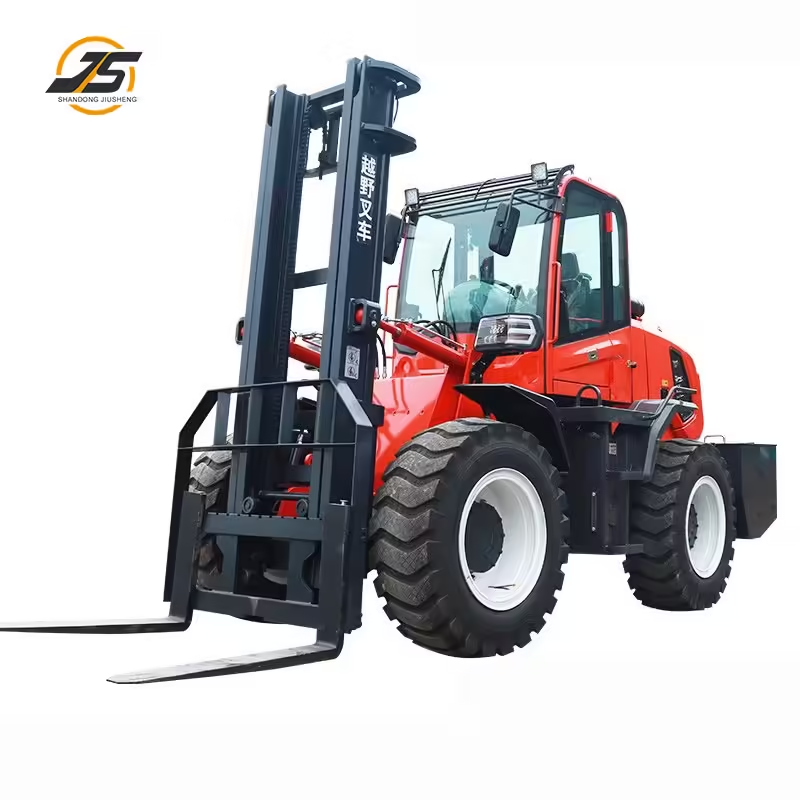
Sit down forklifts come in gas-powered and electric models, making them versatile for both indoor and outdoor use. Gas-powered sit-down forklifts, in particular, can handle rougher terrain and outdoor environments such as construction sites or lumber yards.
On the other hand, pallet jacks are generally designed for smooth surfaces and indoor operations. Their use outside is limited due to their design and weight capacity constraints. They are not suitable for uneven terrain or outdoor conditions.
Energy Efficiency and Fuel Options
For businesses looking to cut operational costs, electric sit down forklifts can be more energy-efficient than their gas or diesel counterparts. They require less maintenance and have lower long-term operational costs, especially in enclosed, indoor environments.
Electric and manual pallet jacks are the most energy-efficient, with no fuel costs for manual versions. Electric pallet jacks do require charging, but they typically use less energy than sit-down forklifts and have lower upfront costs.
Cost Comparison: Sit Down Forklifts vs Pallet Jacks
Initial Investment
When it comes to upfront costs, pallet jacks are much more affordable. A manual pallet jack can cost anywhere from $200 to $800, depending on the model, while electric pallet jacks range from $2,000 to $4,000.
In contrast, sit down forklifts are a significantly larger investment, with prices ranging from $10,000 to $50,000 depending on the model and specifications. The higher initial investment reflects their greater lifting capacities and advanced features.
Long-Term Operational Costs
While pallet jacks require little maintenance and no fuel (for manual models), sit down forklifts typically incur higher long-term costs. Maintenance, fuel (propane or electricity), and operator training all add to the overall cost of owning a forklift. However, the increased productivity and efficiency they provide often justify these higher expenses for larger businesses.
Rental vs Purchase Costs
If your business only needs the equipment for short-term use or seasonal spikes, renting might be a good option. Pallet jacks are often rented for $100 to $200 per day, while sit down forklifts can cost anywhere from $150 to $500 per day to rent, depending on the size and model.
When to Choose a Sit Down Forklift Over a Pallet Jack

Heavy Lifting and High-Capacity Needs
If your business requires the ability to lift heavy loads on a regular basis, sit down forklifts are clearly the better option. They are designed to handle more substantial weights and are well-suited for industries like manufacturing, construction, and wholesale distribution.
Large Warehouses and Complex Layouts
For large warehouses with complex layouts, sit down forklifts offer greater efficiency. Their high load capacity and speed make them ideal for quickly transporting goods across expansive spaces, reducing the need for multiple trips.
Efficiency for Long-Term Business Operations
If you’re looking for long-term operational savings, sit down forklifts might offer better value. Although they come with a higher initial investment, they can significantly improve productivity and reduce labor costs over time.
When to Choose a Pallet Jack Over a Sit Down Forklift
Small to Medium-Sized Operations
For businesses that operate in smaller spaces or handle lighter loads, pallet jacks are often more than sufficient. They are a cost-effective, versatile choice for smaller warehouses, retail stores, or smaller-scale distribution centers.
Tight Spaces and Manual Control
Pallet jacks excel in environments with narrow aisles and confined spaces where sit down forklifts might struggle. They offer manual control for precision tasks, making them ideal for businesses that don’t need to lift heavy loads but require flexibility in tight spots.
Budget-Conscious Choices for Short-Term Use
For businesses on a tight budget or those that need material handling equipment for a short period, pallet jacks are a more affordable and efficient choice. Their low cost and ease of use make them a practical option for smaller operations or those that experience seasonal demand.
Safety Considerations: Sit Down Forklifts vs Pallet Jacks

Operator Safety Features
Sit down forklifts are equipped with a range of safety features such as seat belts, rollover protection, and warning lights. They are also subject to rigorous safety standards like OSHA regulations. However, their large size and powerful capabilities mean that improper use can lead to accidents if not handled carefully.
Pallet jacks, while generally safer due to their lower speeds and smaller size, still present risks, especially if used improperly. Operators need to ensure they use proper lifting techniques to avoid strain and injury.
OSHA Compliance and Regulations
Both sit down forklifts and pallet jacks need to comply with OSHA regulations, but sit-down forklift operators must undergo formal training. Regular safety inspections and certification are mandatory to ensure safe operation.
Common Accidents and How to Prevent Them
Forklift accidents typically occur due to poor visibility, improper operation, or inadequate training. Regular safety checks and operator training are key to preventing these incidents. While pallet jacks are less hazardous, operators should be trained to avoid accidents like pinching injuries or back strain.
Conclusion
When it comes to choosing between sit down forklifts and pallet jacks, the decision ultimately depends on your business needs. Sit down forklifts are ideal for large-scale operations that require heavy lifting, speed, and efficiency in larger spaces. On the other hand, pallet jacks are a more affordable and efficient option for smaller businesses or those that deal with lighter loads in confined areas.
FAQ
What is a sit down forklift?
A sit down forklift is a type of industrial vehicle designed to lift and transport heavy loads. Unlike other forklifts, operators sit comfortably while driving, making it ideal for long hours of operation and larger warehouses.
What are the benefits of using a sit down forklift?
Sit down forklifts offer several benefits, including increased operator comfort, higher lifting capacity, and improved maneuverability in larger warehouse spaces. They are ideal for handling heavy loads and long-distance movement within the facility.
How much weight can a sit down forklift lift?
A sit down forklift can typically lift anywhere between 3,000 to 8,000 pounds, depending on the model and configuration. Some heavy-duty models can even lift up to 15,000 pounds or more.
Can sit down forklifts be used outdoors?
Yes, sit down forklifts, especially gas-powered models, can be used outdoors and on rough terrain. They are designed to handle tougher environments, such as construction sites and outdoor warehouses.
Are sit down forklifts better than pallet jacks?
It depends on your business needs. Sit down forklifts are better for heavy-duty lifting, large warehouse operations, and longer distances. Pallet jacks are more suited for smaller spaces and lighter loads, making them a more cost-effective option for some businesses.
Ready to enhance your warehouse operations with the right equipment? Explore our wide range of sit down forklifts today and find the perfect solution for your business needs. Contact us now for expert advice, pricing details, and personalized recommendations!
 English
  Russian
  French
  Spanish
  Arabic