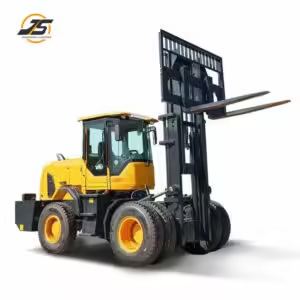


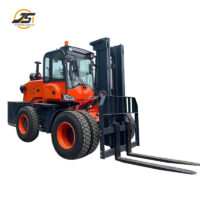
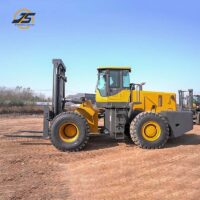
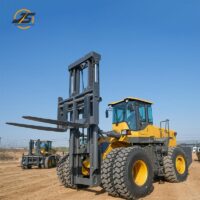
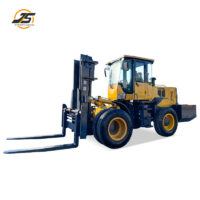
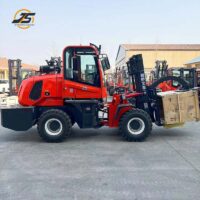
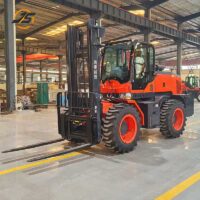
| Jiusheng JS-10 Off-Road Forklift Technical Parameters | |
| Parameter | Value |
| Product Model | JS-10 |
| Engine Model | Weichai WP6 National III 6105 Turbocharging |
| Rated lifting weight | 10000 kg |
| Drive Mode | Four-wheel drive |
| Rated lifting height | 4000-6000mm (optional) |
| Gearbox Model | 315 hydraulic torque converter 428 gearbox |
| Load center distance | 800 mm |
| Axle Model | XCMG Standard 30 Bridge |
| Minimum turning radius | 6500 mm |
| Tire model | 17.5-25 Engineering Steel Wire Tire |
| Maximum climbing angle | <38° |
| Wheelbase | 3000 mm |
| Minimum ground clearance | 380 mm |
| Width of mast steel | 220 mm Heavy duty |
| Forward/back Angle | 10.0/8.0 |
| Fork length | 1520 mm |
| Fastest running speed | 45 km/h |
| Maximum hook traction | 60 kN |
Contact Details
Telephone
+86 153 7656 0472
Address
Beinantian Village South Head, Changgou Town, Jining, Shandong, China
-
 ×
×

10 Tons Off-Road Forklift
Off-road forklifts, also known as field forklifts, are material-handling equipment designed for loading and unloading goods in areas with poor road conditions, such as airports, docks, and railway stations. They feature excellent mobility, off-road capability, and reliability.
An off-road forklift typically consists of four main components:
Engine
Chassis
Working mechanism
Electrical system
These forklifts are primarily used in:
Urban construction sites
Pipeline installation
Oilfield development
Mountainous and forested areas for field engineering
Container handling at ports and freight yards
Military logistics for transporting supplies during wartime
Let me know if you’d like any adjustments!
Open full product page10 Tons Off-Road Forklift
-
×
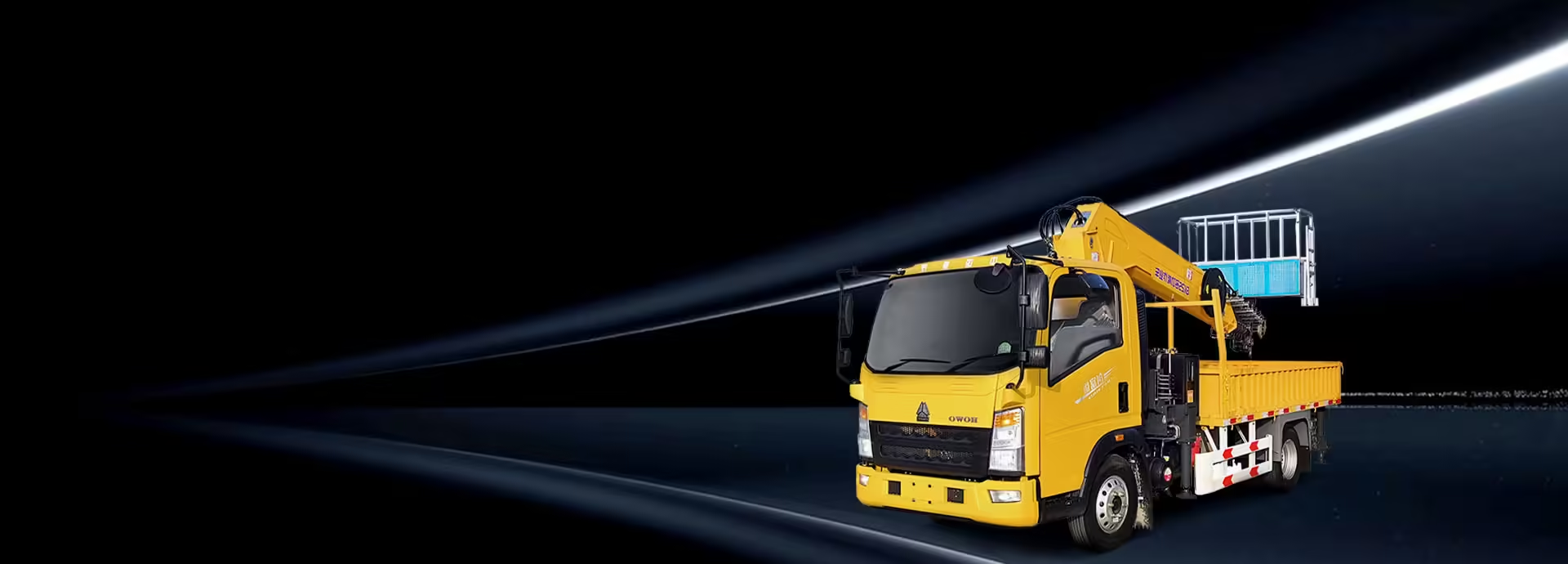
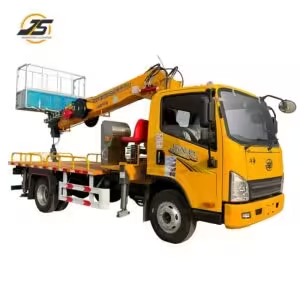
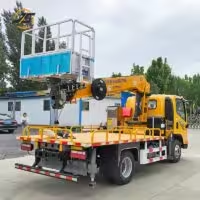
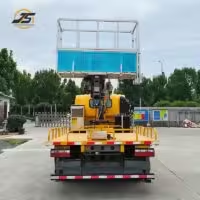
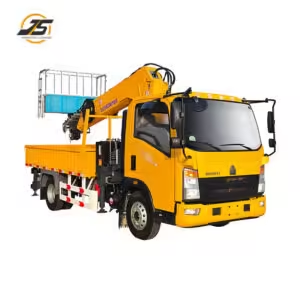
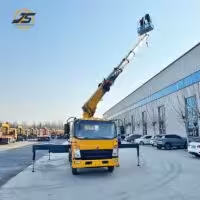
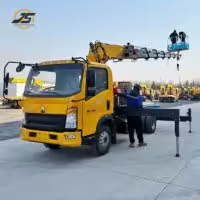
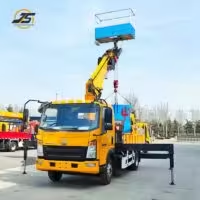
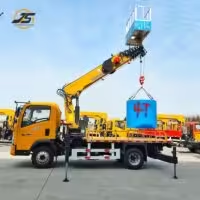
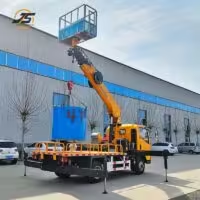
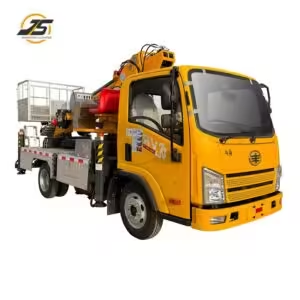
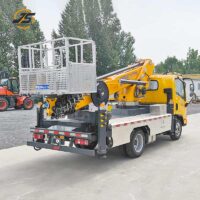
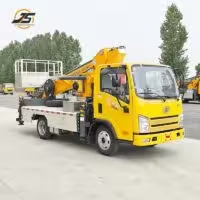
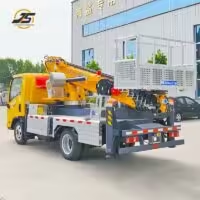
GK20 Aerial Work Platform
Aerial work platforms refer to movable mechanical equipment used for operations at certain heights. They lift workers, tools, and materials to specific positions for work, providing safety guarantees for operators. Aerial work platforms can replace traditional methods such as suspended baskets and scaffolding, significantly improving safety and efficiency.
I. Features:
Mobility: Can be easily moved to different work locations.High Safety: Provides safety guarantees for workers, reducing the risks of high-altitude operations.
Improved Efficiency: Compared to traditional methods, they greatly enhance operational efficiency.
Strong Adaptability: Various types are available to suit different operational needs and environmental conditions.
II. Safety Operation Procedures:
Pre-Operation Inspection:Check the structure for deformations.
Ensure the hydraulic system’s oil level is normal; refill if insufficient.
Inspect tire pressure to ensure it meets the specified range.
Verify the braking system is sensitive and reliable to ensure stable parking.
Test the flexibility of control handles to ensure precise operation.
Before starting, clear surrounding debris to maintain an unobstructed workspace.
Load Requirements:
Overloading is strictly prohibited; the rated load capacity must not be exceeded.
Movement Requirements:
When moving the platform, speed should not be excessive and must remain within the specified limit.
Let me know if you’d like any refinements!
Open full product pageGK20 Aerial Work Platform Technical Parameters Parameter Value Overall dimensions 5995mm*2240mm*2850mm Gross weight 4490 kg Engine WP2.3Q140E62 Rearview mirror Left/right frame type new GB mirror (four-mirror type) Suspension 3/5+3HJ Transmission WLY8GS46 Cab configuration Classic Dream Chaser edition Fuel tank Integrated fuel-DEF system (120L+25L capacity) Cab interior Fully enclosed cab Clutch booster With clutch booster Spring brake With spring brake system Tires 7.00R16 10PR HS steel wheel tubeless tires Front axle 2.0 t Rear axle 3.5 t / 4.875 Max working height 19 m Platform rated load 200 kg Platform dimensions 1500mm*700mm*1100mm Max working radius 14 m Boom rotation angle 360° Platform rotation range ±180° Max lifting capacity 4000 kg Main winch 4 T Crane arm 6-section boom with 5-stage synchronous extension, wire rope arm with spare wire rope Deck size 3300mm*2100mm Max lifting height 17 m Slewing mechanism 360° unlimited slewing Hydraulic power pump Single Pump Operation mode Center-mounted controls Control system Domestically renowned electronic control system with wireless remote control for triple operation Hydraulic outriggers H-type outriggers with 4 individually adjustable telescopic legs; full-enclosure design for enhanced stability Safety devices Interlock system between upper and lower structures, limit protection, emergency power source, two-way hydraulic balance valve Oil paint Common cab paint Hydraulic system Electro-hydraulic proportional valve, can be stepless speed regulation, with emergency power source GK20 Aerial Work Platform
-
×
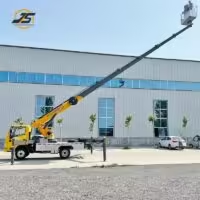
GK25 Aerial Work Platform
Aerial work platforms refer to movable mechanical equipment used for operations at certain heights. They lift workers, tools, and materials to specific positions for work, providing safety guarantees for operators. Aerial work platforms can replace traditional methods such as suspended baskets and scaffolding, significantly improving safety and efficiency.
I. Features:
Mobility: Can be easily moved to different work locations.High Safety: Provides safety guarantees for workers, reducing the risks of high-altitude operations.
Improved Efficiency: Compared to traditional methods, they greatly enhance operational efficiency.
Strong Adaptability: Various types are available to suit different operational needs and environmental conditions.
II. Safety Operation Procedures:
Pre-Operation Inspection:Check the structure for deformations.
Ensure the hydraulic system’s oil level is normal; refill if insufficient.
Inspect tire pressure to ensure it meets the specified range.
Verify the braking system is sensitive and reliable to ensure stable parking.
Test the flexibility of control handles to ensure precise operation.
Before starting, clear surrounding debris to maintain an unobstructed workspace.
Load Requirements:
Overloading is strictly prohibited; the rated load capacity must not be exceeded.
Movement Requirements:
When moving the platform, speed should not be excessive and must remain within the specified limit.
Let me know if you’d like any refinements!
Open full product pageGK25 Aerial Work Platform Technical Parameters Parameter Value Overall dimensions 5998mm*2250mm*3060mm Gross weight 4495 kg Engine WP2.3Q140E62 Rearview mirror Left/Right GB-compliant frame-type rearview mirrors Suspension 3/5+3HJ Transmission WLY8GS46 Cab configuration Classic Dream Chaser edition Fuel tank Integrated fuel-DEF system (120L+25L capacity) Cab interior Fully enclosed cab Clutch booster With clutch booster Spring brake With spring brake system Tires 7.00R16 10PR HS steel wheel tubeless tires Front axle 2.0 t Max working height 23 m Platform rated load 230 kg Platform dimensions 1600mm*700mm*1000mm Max working radius 16 m Boom rotation angle 360° Platform rotation range ±180° Max lifting capacity 5000 kg Main winch 5 T Crane arm 7-section boom Deck size 3300mm*2100mm Max lifting height 23 m Slewing mechanism 360° unlimited slewing Hydraulic power pump Single Pump Operation mode Center-mounted controls Boom(or Main arm) 7-section boom with 6-stage synchronous extension Control system Domestically renowned electronic control system with wireless remote control for triple operation Hydraulic outriggers H-type outriggers with 4 individually adjustable telescopic legs; full-enclosure design for enhanced stability Safety devices Interlock system between upper and lower structures GK25 Aerial Work Platform
-
×
GK30 Aerial Work Platform
Aerial work platforms refer to movable mechanical equipment used for operations at certain heights. They lift workers, tools, and materials to specific positions for work, providing safety guarantees for operators. Aerial work platforms can replace traditional methods such as suspended baskets and scaffolding, significantly improving safety and efficiency.
I. Features:
Mobility: Can be easily moved to different work locations.High Safety: Provides safety guarantees for workers, reducing the risks of high-altitude operations.
Improved Efficiency: Compared to traditional methods, they greatly enhance operational efficiency.
Strong Adaptability: Various types are available to suit different operational needs and environmental conditions.
II. Safety Operation Procedures:
Pre-Operation Inspection:Check the structure for deformations.
Ensure the hydraulic system’s oil level is normal; refill if insufficient.
Inspect tire pressure to ensure it meets the specified range.
Verify the braking system is sensitive and reliable to ensure stable parking.
Test the flexibility of control handles to ensure precise operation.
Before starting, clear surrounding debris to maintain an unobstructed workspace.
Load Requirements:
Overloading is strictly prohibited; the rated load capacity must not be exceeded.
Movement Requirements:
When moving the platform, speed should not be excessive and must remain within the specified limit.
Let me know if you’d like any refinements!
Open full product pageGK30 Aerial Work Platform Technical Parameters Parameter Value Overall dimensions 5998mm*2250mm*3060mm Gross weight 4495 kg Engine WP2.3Q140E62 Rearview mirror Left/Right GB-compliant frame-type rearview mirrors Suspension 3/5+3HJ Transmission WLY8GS46 Cab configuration Classic Dream Chaser edition Fuel tank Integrated fuel-DEF system (120L+25L capacity) Cab interior Fully enclosed cab Clutch booster With clutch booster Spring brake With spring brake system Tires 7.00R16 10PR HS steel wheel tubeless tires Front axle 2.0 t Max working height 23 m Platform rated load 230 kg Platform dimensions 1600mm*700mm*1000mm Max working radius 16 m Boom rotation angle 360° Platform rotation range ±180° Max lifting capacity 5000 kg Main winch 5 T Crane arm 7-section boom Deck size 3300mm*2100mm Max lifting height 23 m Slewing mechanism 360° unlimited slewing Hydraulic power pump Single Pump Operation mode Center-mounted controls GK30 Aerial Work Platform
-
×
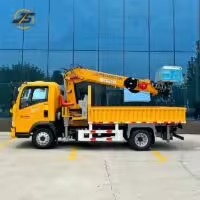
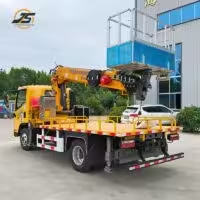
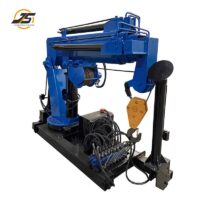
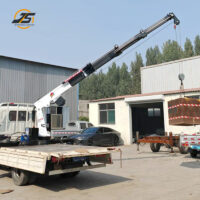
3T Boom
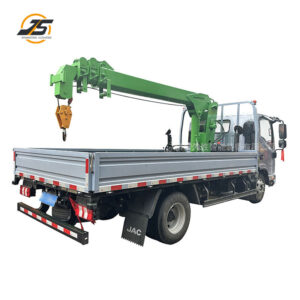
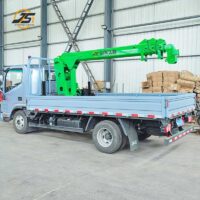
The boom is the core component of lifting equipment (such as truck cranes, crawler cranes, marine cranes, knuckle boom cranes, etc.), enabling cargo lifting and positioning through telescoping, slewing, or folding. Its design directly affects the crane’s lifting capacity, working radius, and applicable scenarios.
Basic Components:
Main Boom: The foundational support structure, typically designed as a box-type or truss configuration, providing the primary load-bearing capacity.
Jib (Optional): Attached to the top of the main boom to extend the working radius or increase lifting height, suitable for specialized operations (e.g., high-rise building construction).
Telescoping Mechanism: Adjusts boom length via hydraulic or mechanical transmission, with some booms supporting multi-stage synchronous extension.
Connection Joints: Utilize high-strength bolts or pin connections to ensure structural stability.
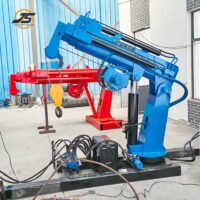
Open full product page3T Winch, 14-inch Integrated Slewing Ring, 3-Section 3-meter Boom (with Rope Return), 360° Continuous Rotation (Central Swivel Joint), Luffing Hydraulic Cylinder, Dual-Direction Operation, Two Hydraulic Outriggers
3T Boom
-
×
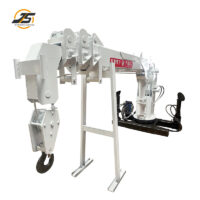
6T Boom
The boom is the core component of lifting equipment (such as truck cranes, crawler cranes, marine cranes, knuckle boom cranes, etc.), enabling cargo lifting and positioning through telescoping, slewing, or folding. Its design directly affects the crane’s lifting capacity, working radius, and applicable scenarios.
Basic Components:
Main Boom: The foundational support structure, typically designed as a box-type or truss configuration, providing the primary load-bearing capacity.
Jib (Optional): Attached to the top of the main boom to extend the working radius or increase lifting height, suitable for specialized operations (e.g., high-rise building construction).
Telescoping Mechanism: Adjusts boom length via hydraulic or mechanical transmission, with some booms supporting multi-stage synchronous extension.
Connection Joints: Utilize high-strength bolts or pin connections to ensure structural stability.
Open full product pagewinch, 17-inch integrated rotary plate, 3.5m 4-section arm (return rope), 360″ continuous rotation (center joint), vertical top luffing cylinder, two-way downward operation, two frame legs
6T Boom
-
×
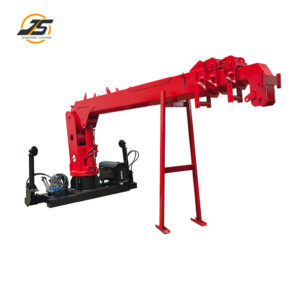
8T Boom
The boom is the core component of lifting equipment (such as truck cranes, crawler cranes, marine cranes, knuckle boom cranes, etc.), enabling cargo lifting and positioning through telescoping, slewing, or folding. Its design directly affects the crane’s lifting capacity, working radius, and applicable scenarios.
Basic Components:
Main Boom: The foundational support structure, typically designed as a box-type or truss configuration, providing the primary load-bearing capacity.
Jib (Optional): Attached to the top of the main boom to extend the working radius or increase lifting height, suitable for specialized operations (e.g., high-rise building construction).
Telescoping Mechanism: Adjusts boom length via hydraulic or mechanical transmission, with some booms supporting multi-stage synchronous extension.
Connection Joints: Utilize high-strength bolts or pin connections to ensure structural stability.
Open full product page8T winch, 19-inch integrated rotary plate, 4 meters 4 sections 0 arm (return arm rope), 360° continuous rotation (center joint), vertical top luffing cylinder, upper operation/two-way downward operation, two frame legs
8T Boom
-
×
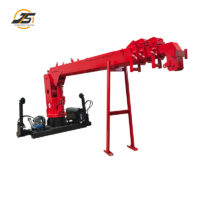
10T Boom
The boom is the core component of lifting equipment (such as truck cranes, crawler cranes, marine cranes, knuckle boom cranes, etc.), enabling cargo lifting and positioning through telescoping, slewing, or folding. Its design directly affects the crane’s lifting capacity, working radius, and applicable scenarios.
Basic Components:
Main Boom: The foundational support structure, typically designed as a box-type or truss configuration, providing the primary load-bearing capacity.
Jib (Optional): Attached to the top of the main boom to extend the working radius or increase lifting height, suitable for specialized operations (e.g., high-rise building construction).
Telescoping Mechanism: Adjusts boom length via hydraulic or mechanical transmission, with some booms supporting multi-stage synchronous extension.
Connection Joints: Utilize high-strength bolts or pin connections to ensure structural stability.
Open full product page10T winch, 21-inch integrated rotary disc (900 internal chainring), 4.5 m 5 sections (return rope), 360 continuous rotation (center joint), vertical luffing cylinder, upper operation, two double-section frame hydraulic outriggers
10T Boom
-
×
12T Boom
The boom is the core component of lifting equipment (such as truck cranes, crawler cranes, marine cranes, knuckle boom cranes, etc.), enabling cargo lifting and positioning through telescoping, slewing, or folding. Its design directly affects the crane’s lifting capacity, working radius, and applicable scenarios.
Basic Components:
Main Boom: The foundational support structure, typically designed as a box-type or truss configuration, providing the primary load-bearing capacity.
Jib (Optional): Attached to the top of the main boom to extend the working radius or increase lifting height, suitable for specialized operations (e.g., high-rise building construction).
Telescoping Mechanism: Adjusts boom length via hydraulic or mechanical transmission, with some booms supporting multi-stage synchronous extension.
Connection Joints: Utilize high-strength bolts or pin connections to ensure structural stability.
Open full product page12T winch, 1000m thickened rotary plate, 5m 4-section arm (return arm rope), two-stage planetary reducer, 360° continuous rotation (center joint), vertical luffing cylinder, upper operation, the first two double-section frame hydraulic outriggers, the rear two single-section outriggers
12T Boom



















Load More
Help Center
Get Answers to Your Questions
At Shandong Jiusheng, we prioritize your experience in customizing your lifting equipment.
How to start customization?
Visit our site, select the product, click “Customize Now”, fill in requirements and submit.
Check design solutions before confirmation?
Yes. Our team provides preliminary designs for your review after you submit basic info.
Info needed for customization?
Working scenarios, performance needs, special designs, and contact details.
Modify confirmed plan?
Early minor changes allowed; contact us promptly for adjustments.
Deposit for customization?
Yes, a deposit (50% of the total cost) is required to get started.
Get a quote before finalizing?
Sure. Submit requirements and our team will provide a detailed quote.
Start a customized solution
Want to build your own lifting equipment?
Get a Quote Right Now
What we offer
Make every customization precise and innovative
Shandong Jiusheng Intelligent Equipment Co., Ltd. is a high-tech enterprise integrating the research and development, production and sales of crane equipment. The company has many product patents, direct supply from the factory, no middlemen, adhering to the concept of green win-win, closely connected with customers, establishing strategic partnerships, constantly improving product performance, and wholeheartedly providing customers with valuable equipment.
R&D Strength
Shandong Jiusheng is a high-tech enterprise with many product patents and a good reputation.
Custom processing
Advanced R&D team supports customized production and accurately adapts to the needs of multiple scenarios.
quality assurance
Carefully selected materials, refined craftsmanship, and multiple certifications to ensure quality.
transportation
Global logistics coverage, accurate delivery to the customer's designated location.
Technical training
Provide video training and operation guidance to solve customer problems remotely.
After-sales guarantee
The product is guaranteed for one year, and the 7*24 hours online customer service responds to your needs.
 English
  Russian
  French
  Spanish
  Arabic