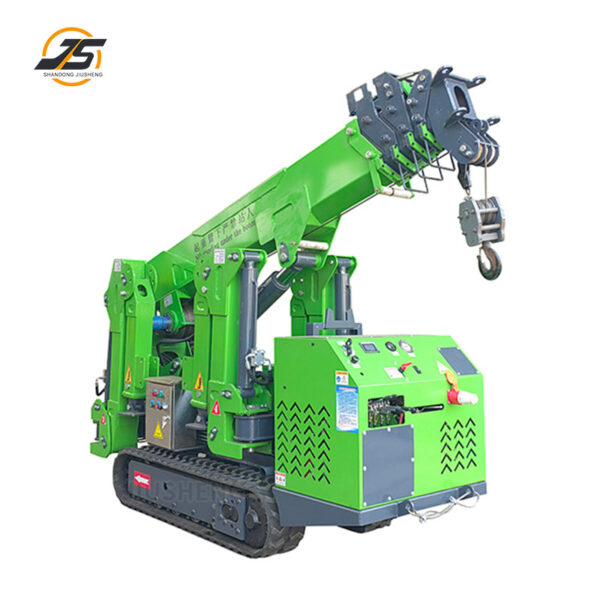
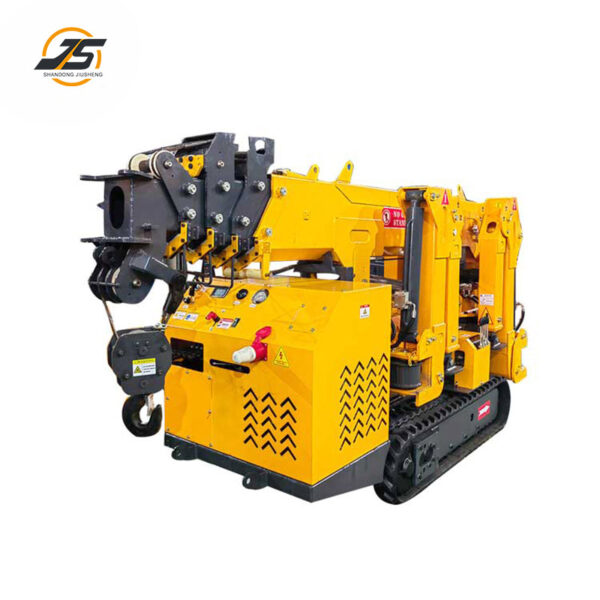
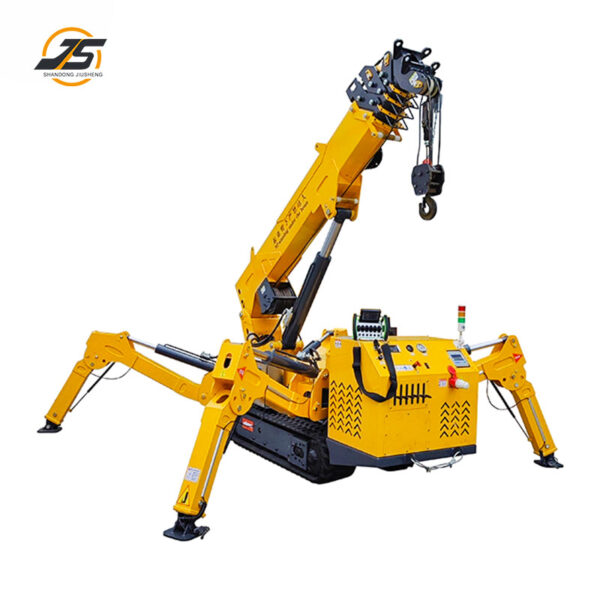
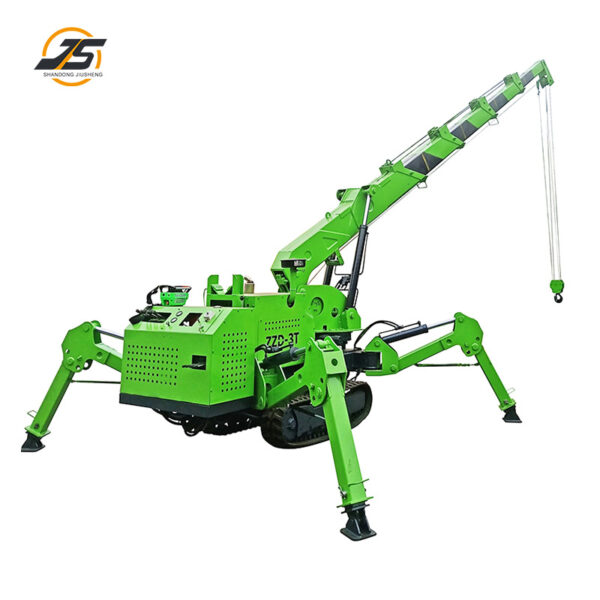
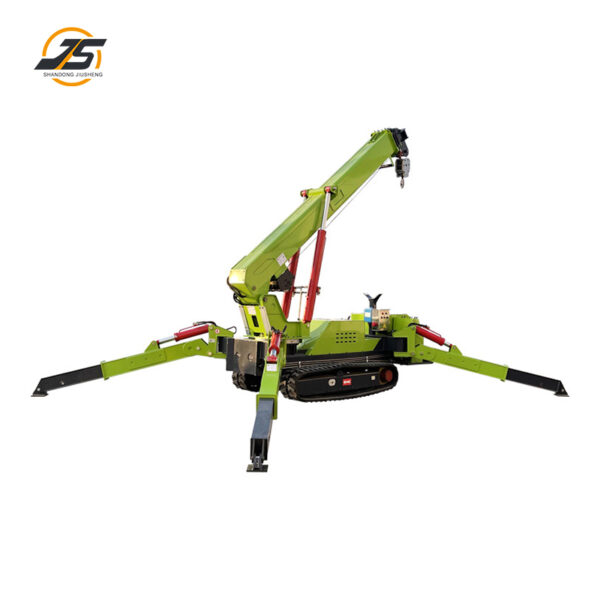
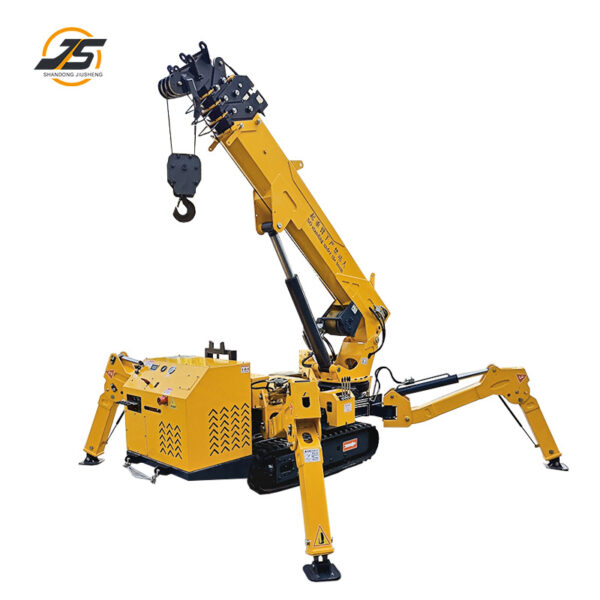
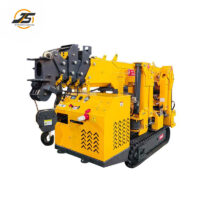
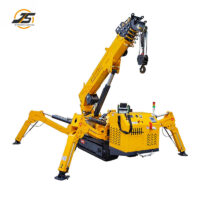
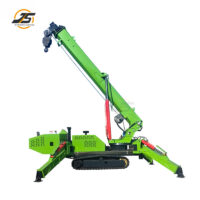
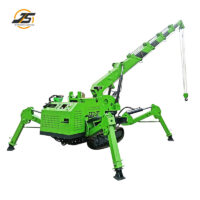
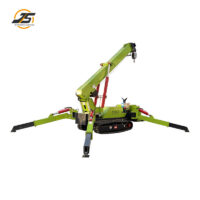
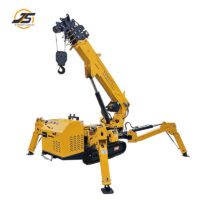
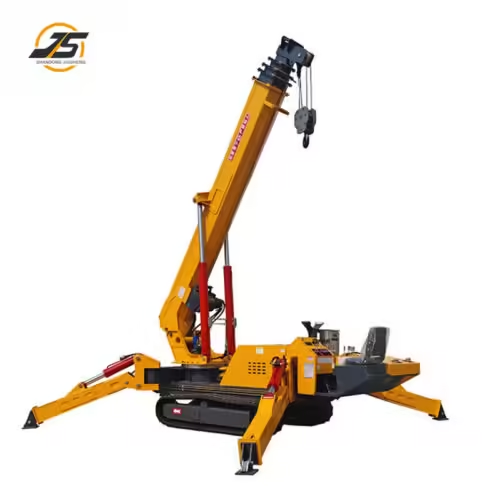
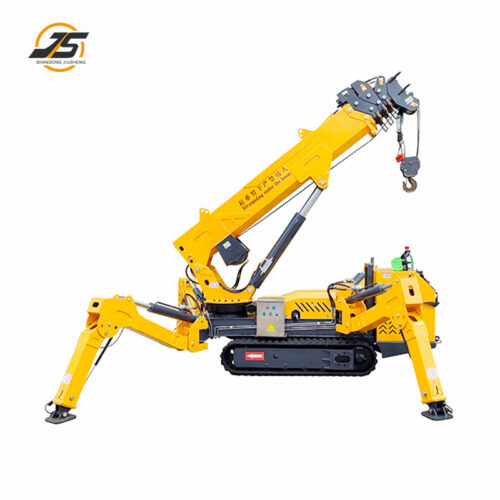
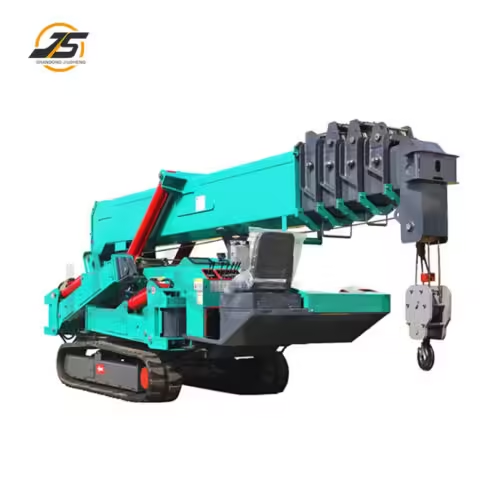
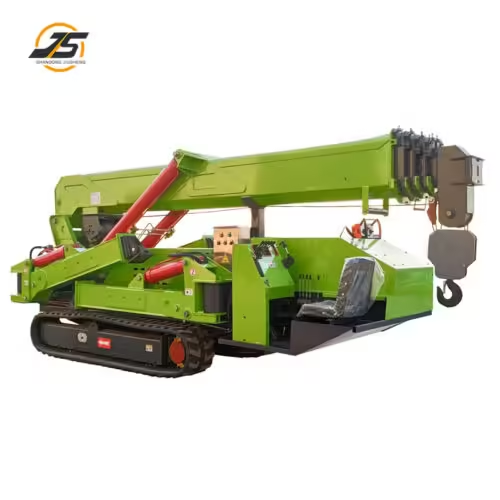
The spider crane (also known as a tracked spider crane) is a compact lifting device specifically designed for confined spaces and complex working conditions. Its unique structure and functionality make it indispensable in industries such as construction, industrial maintenance, and power operations.
Featuring four extendable outriggers and a tracked chassis, the spider crane can retract to a width of less than 1 meter, allowing it to easily navigate narrow passages (such as indoor corridors or stairwells) or access low-clearance areas (such as basements or factory interiors). For example, during the installation of glass curtain walls in high-rise buildings, the spider crane can be transported via elevator to the rooftop and deployed immediately for operation.
The tracked chassis provides exceptional mobility, enabling stable operation on challenging terrains like mud, sand, or snow. For instance, during maintenance work in petrochemical plants, the spider crane can traverse uneven ground without the need for additional steel plates or wooden supports.
The spider crane’s main boom can be equipped with a jib or a personnel platform, combining lifting and aerial work capabilities. In heritage restoration projects, for example, it can be fitted with a platform for roof tile replacement or timber structure repairs, eliminating the need for traditional scaffolding that could damage historic structures.
The spider crane has become the go-to equipment for lifting operations in confined spaces. Its core advantages lie in its adaptability to complex conditions, enhanced safety, and reduced overall costs. For construction companies, deploying spider cranes not only expands project capabilities but also creates a competitive edge in a demanding market.


 English
  Russian
  French
  Spanish
  Arabic