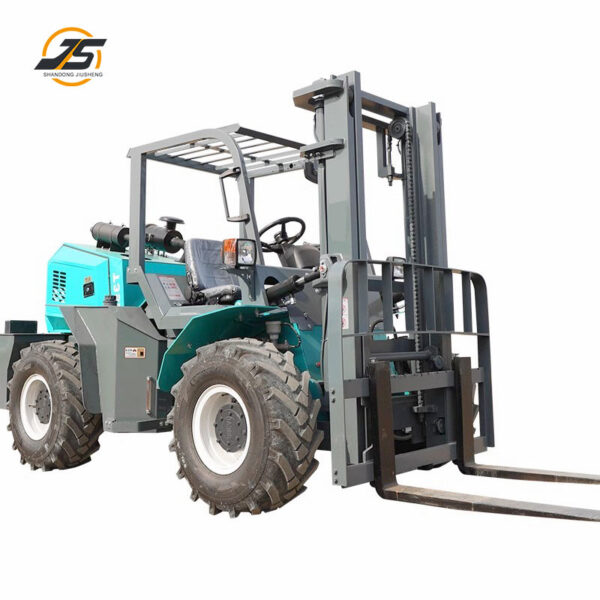
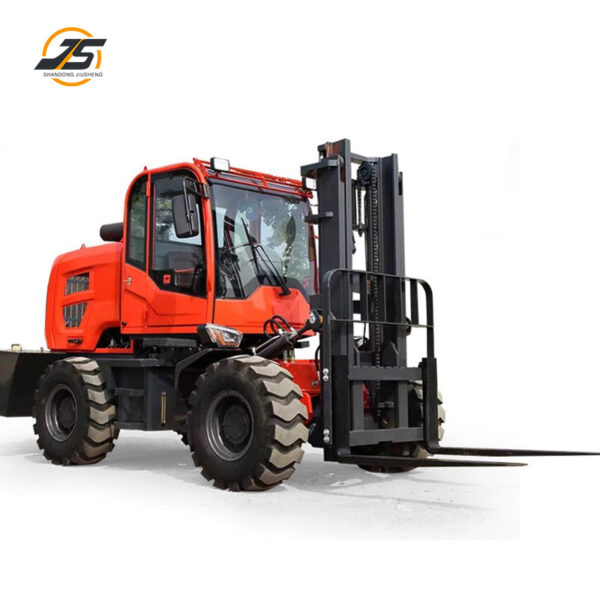
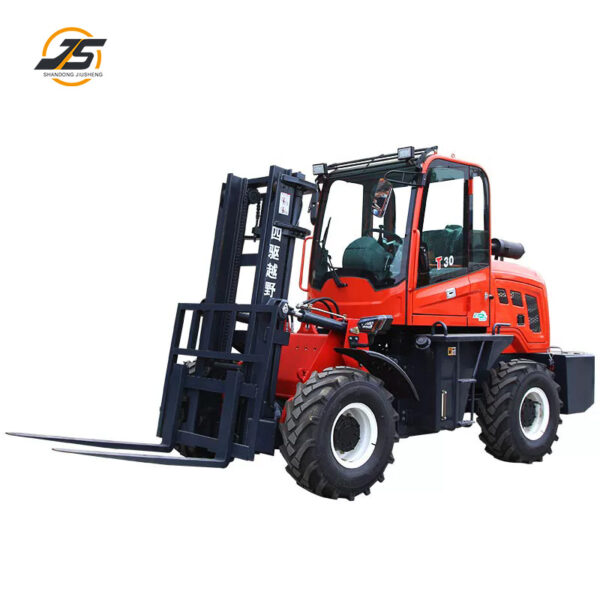
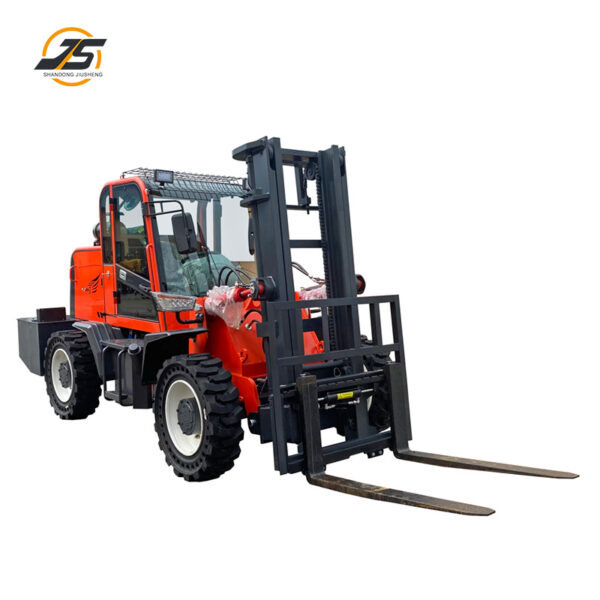
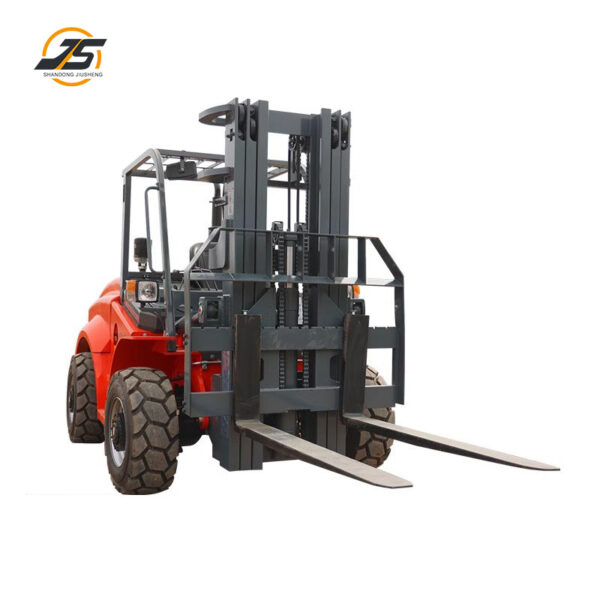
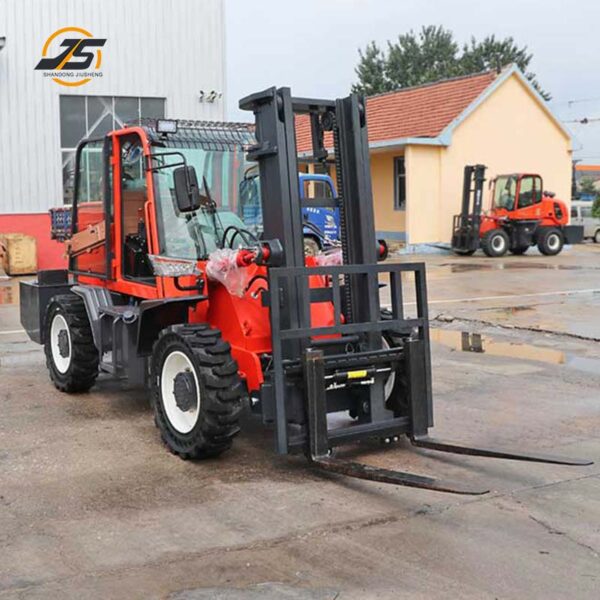
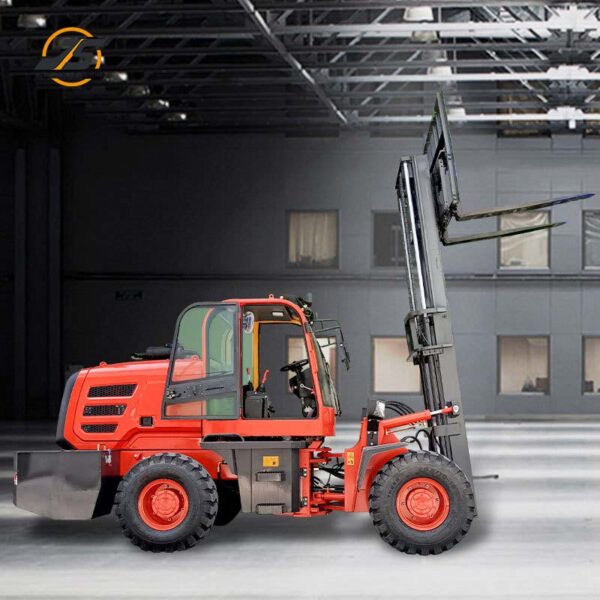
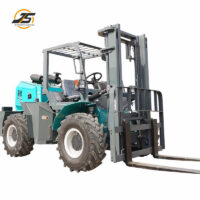
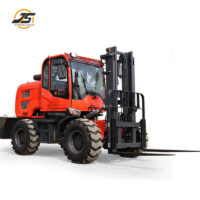
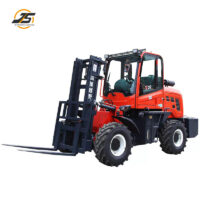
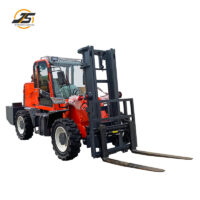
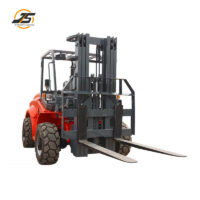
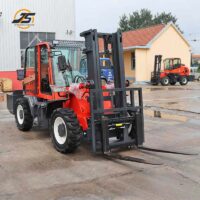
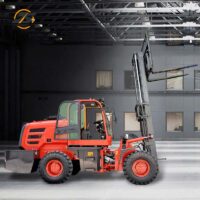
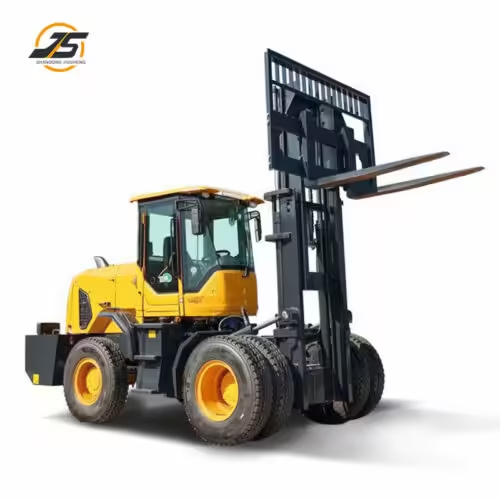
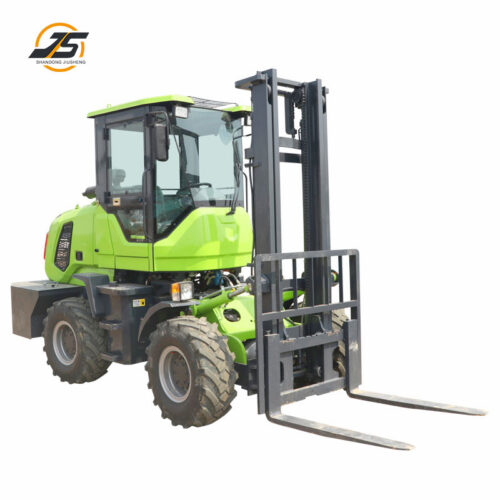
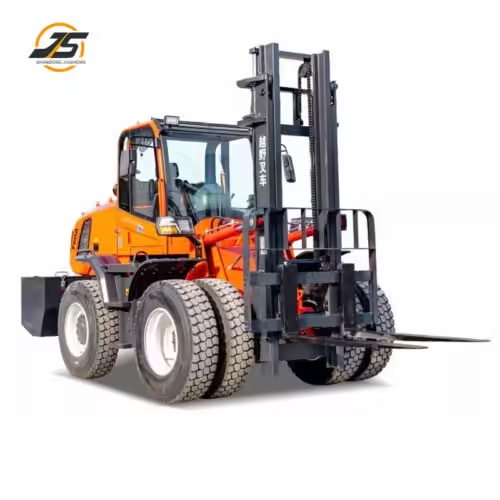
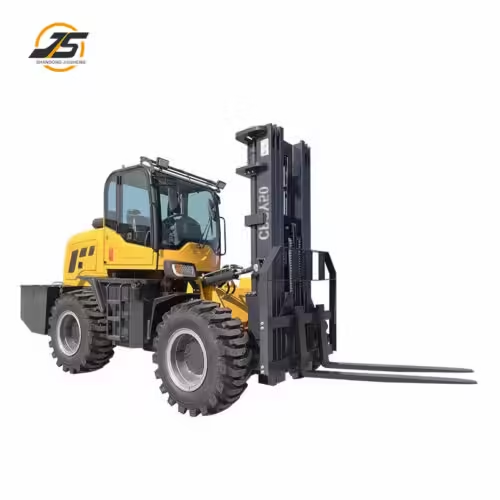
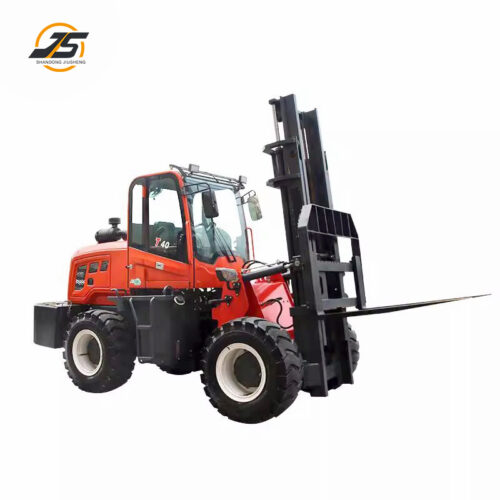
Off-road forklifts are industrial vehicles specifically designed for complex terrains and harsh working conditions, featuring robust off-road capabilities and adaptability to multiple scenarios. They are widely used in construction, mining, agriculture, forestry, and logistics.
I. Core Features
Off-Road Performance: Equipped with four-wheel drive or full-time all-wheel-drive systems, paired with large-diameter, deep-tread tires to enhance traction on muddy, sandy, and rocky surfaces.
Power System: Primarily powered by diesel engines, delivering high torque and extended endurance, making them ideal for heavy-load continuous operations.
Reinforced Structure: The chassis is constructed with high-strength steel, improving torsional rigidity by over 30% to withstand rugged terrains.
II. Core Application Scenarios
Construction & Infrastructure: In construction waste yards or earthwork sites, off-road forklifts can quickly load debris, bricks, and other waste materials, adapting to muddy or uneven ground.
Mining & Quarries: With a load capacity of 8–10 tons, they can transport ores and blasting equipment to open-pit mines, featuring a climbing ability of 35%–45% to meet steep slope operations in mining areas.
Agricultural Transport: In orchards and farms, they move fruit crates and feed bags, while the tire tread design reduces soil compaction (pressure decreased by 20%–30%), protecting farmland structure.
Forestry Operations: Equipped with log grapple attachments, they can load logs and branches onto transport vehicles, adapting to narrow mountain slopes.
Let me know if you’d like any refinements!

 English
  Russian
  French
  Spanish
  Arabic