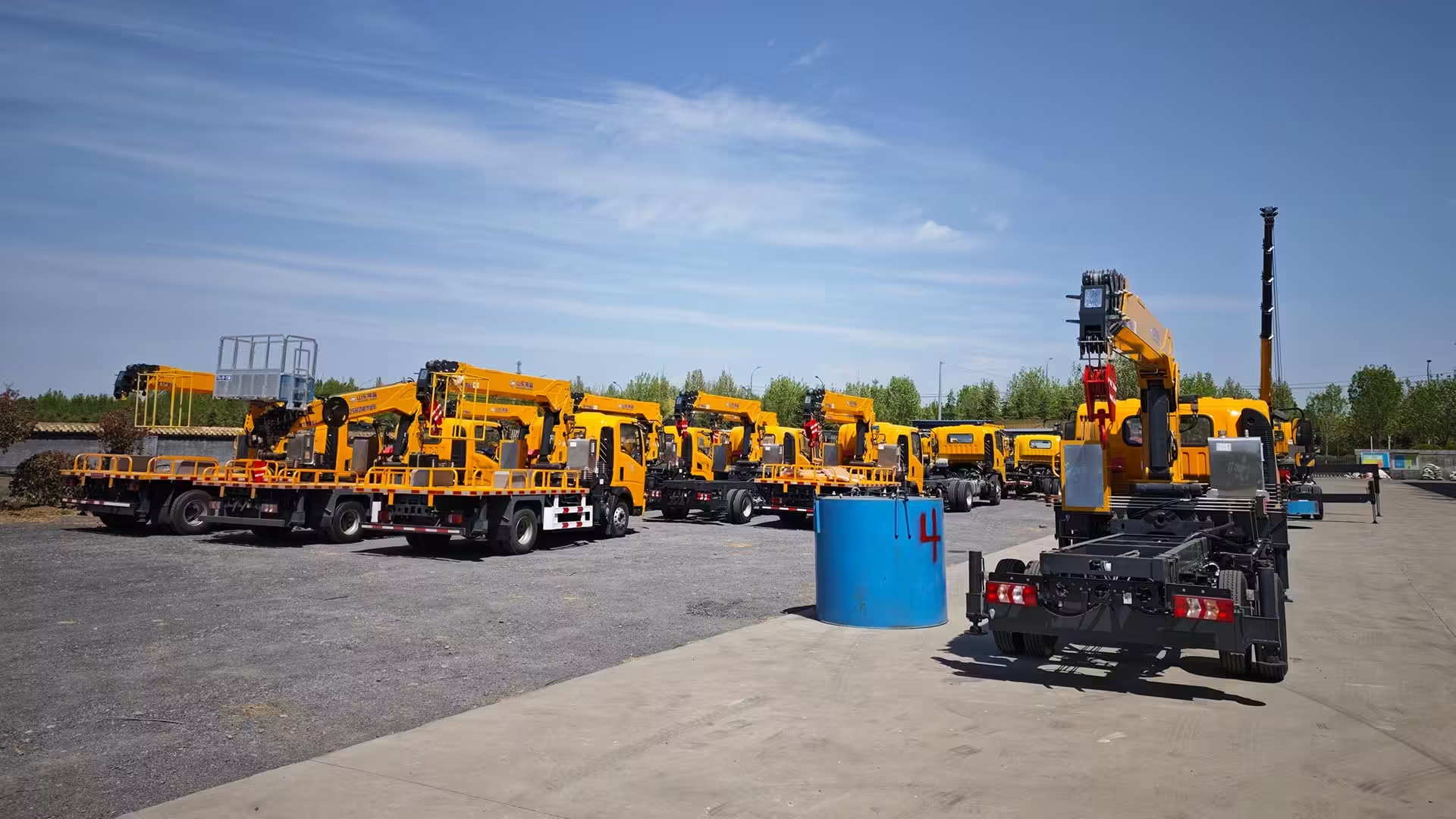
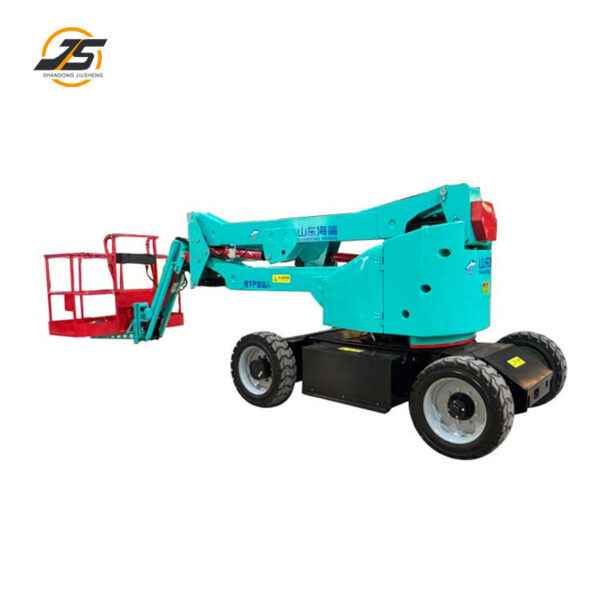
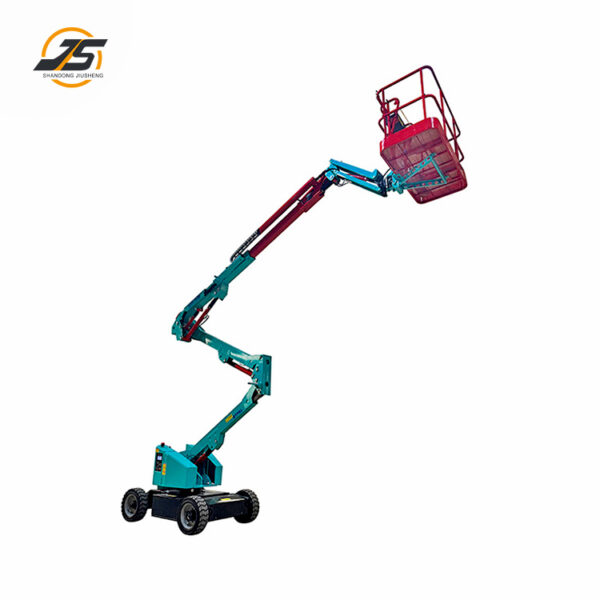
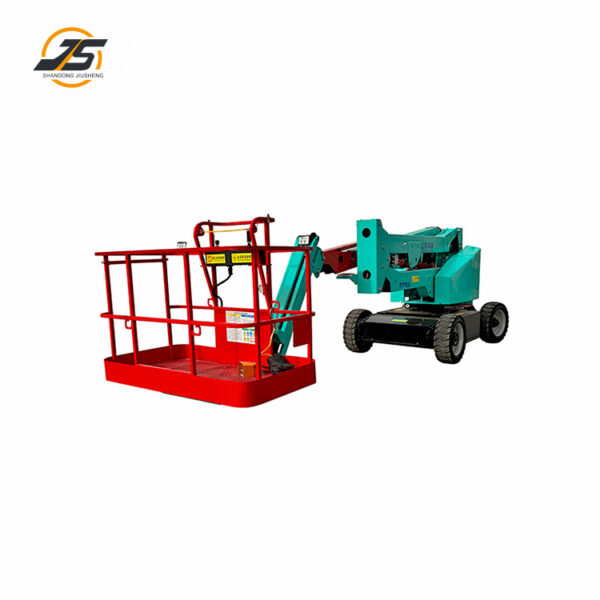
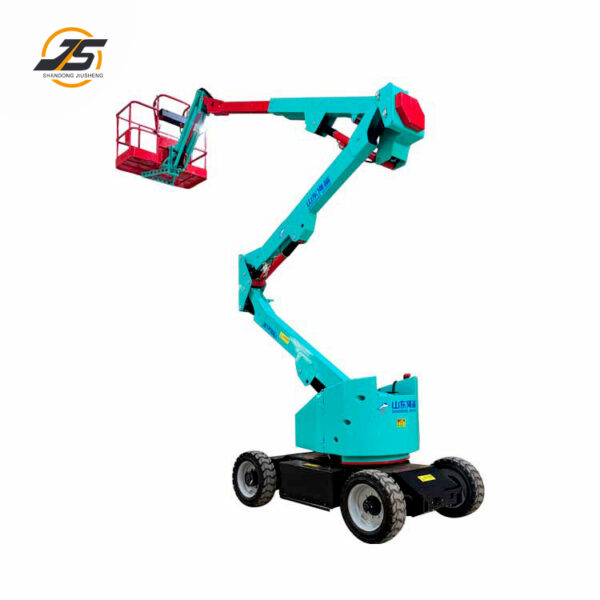
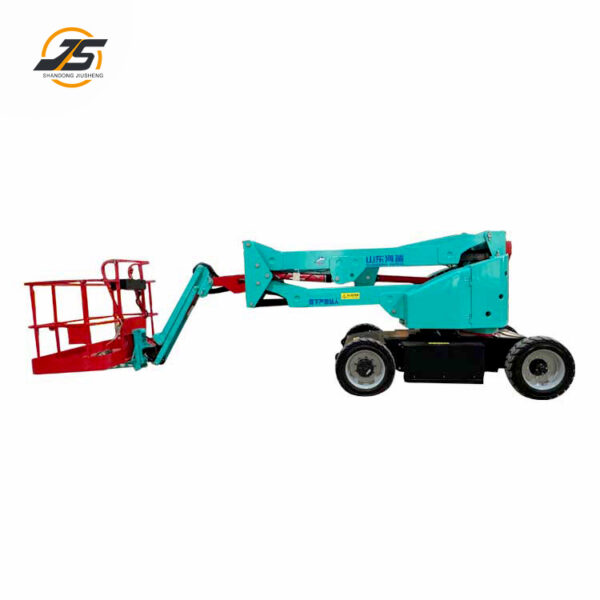
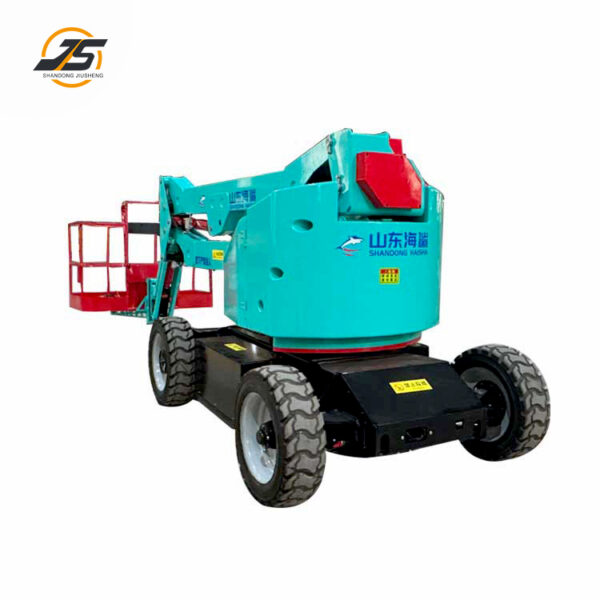
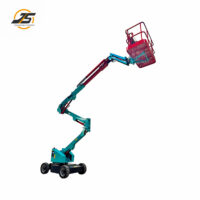
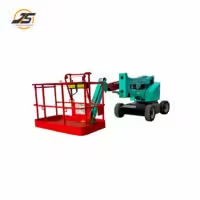
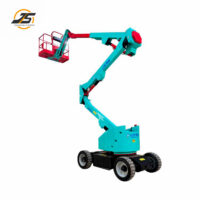
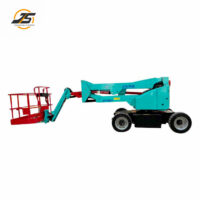
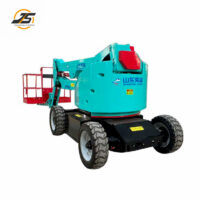
A self-propelled articulated boom lift is a versatile equipment combining mobility and aerial work capabilities. Below is an introduction covering its structural features, working principles, applications, and advantages/disadvantages.
Structural Features
Compact & Flexible: Designed with a compact structure and agile steering, offering high chassis stability for narrow passages and congested workspaces.
Multi-Section Articulated Boom: Utilizes a multi-stage folding boom system for extended outreach, paired with a 360° rotating platform for enhanced range.
Dual-Power System: Equipped with both diesel and electric drive modes to adapt to diverse energy needs.
Safety Mechanisms: Integrates triple protection (mechanical, electrical, and hydraulic) and features a unified hydraulic-electrical control system.
Working Principle
The hydraulic drive system powers cylinder extensions/retractions, enabling boom folding/extension for platform elevation and positioning. The power unit (diesel engine or battery) supplies energy for movement and operations. The control panel allows simultaneous travel and aerial work, with continuous operation possible at any elevated position.
Applications
Municipal & Electrical: Streetlight maintenance, billboard installation, and power facility repairs.
Construction & Industrial: Bridge construction, high-rise facade cleaning, factory maintenance, and shipbuilding.
Public Facilities: Ceiling/lighting maintenance in stations, hospitals, and shopping malls.

 English
  Russian
  French
  Spanish
  Arabic