

Welcome to My Blog!
Before we dive into the content, if you’re interested in our products or have any questions, please feel free to visit our Contact Us page on the website. Our team is ready to assist you with inquiries, orders, or any support you may need.
Now, let’s get started on our journey together. I hope you find the content here insightful, engaging, and valuable.
Table of Contents
Introduction

Choosing the right crane for heavy lifting can significantly impact the success and safety of a project. Both marine hoist cranes and regular cranes are used to lift heavy loads, but each has distinct features and applications. Marine hoist cranes are designed specifically for maritime environments, while regular cranes are more versatile and typically used for land-based operations.
In this blog, we’ll examine the key differences between marine hoist cranes and regular cranes, covering their design, applications, lifting capacities, and cost considerations. Understanding these differences will help you choose the crane that best suits your needs, whether you’re working in a shipyard, port, or construction site.
Design and Structural Differences
One of the most obvious differences between marine hoist cranes and regular cranes is their design and ability to withstand different environmental conditions.
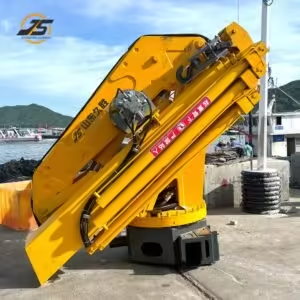
- Marine Hoist Cranes: Built specifically for maritime environments, marine hoist cranes are constructed with corrosion-resistant materials. These cranes are designed to perform in wet, saltwater environments, where the effects of saltwater corrosion are a constant concern. They often include features like waterproof seals and galvanized finishes to protect against water exposure. The design of these cranes includes heavy-duty winches and lifting arms to handle the immense weights of ships and marine cargo.
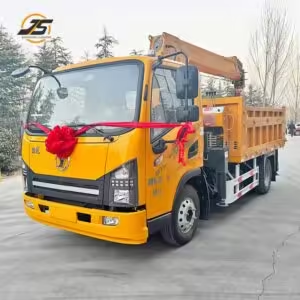
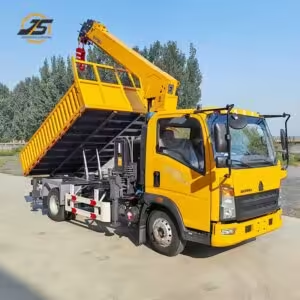
- Regular Cranes: On the other hand, regular cranes (such as mobile cranes or tower cranes) are primarily designed for land-based operations. These cranes are generally not built with the same level of corrosion resistance as marine hoist cranes, and they lack features for moisture protection. Regular cranes are more versatile, capable of operating on a variety of terrains but not in environments where saltwater and humidity are prevalent.
| Feature | Marine Hoist Crane | Regular Crane |
|---|---|---|
| Design | Designed for wet, corrosive environments | Built for land use, not resistant to saltwater |
| Materials | Marine-grade steel, corrosion-resistant | Standard steel, requires protection for marine use |
| Waterproofing | Waterproof seals and coatings | Not designed for wet conditions without modifications |
| Maneuverability | Limited to dockside, fixed locations | Mobile, versatile on various terrains |
Applications in Shipyards and Marine Environments

The application of each crane type is another key area where they differ.
- Marine Hoist Cranes: These cranes are essential in shipyards, ports, and marinas, where they are used for shipbuilding, maintenance, and cargo handling. Marine hoist cranes are capable of lifting entire ships, boats, and offshore equipment, as well as other heavy marine structures. They are often used in dry docks to lift vessels out of the water for repairs or inspections, making them crucial for the maritime industry.
- Regular Cranes: While regular cranes are useful in various land-based applications like construction, roadwork, and industrial lifting, they are not suitable for the heavy-duty lifting tasks associated with marine environments. These cranes are versatile but lack the necessary features to handle ship-sized weights or to operate in harsh marine conditions. However, mobile cranes can be adapted for some maritime tasks with the right modifications.
Lifting Capacity: Comparing Strengths
The lifting capacity of cranes plays a significant role in choosing the right equipment for the job.
- Marine Hoist Cranes: These cranes are built to lift extremely heavy loads. They are designed to handle the lifting of ships, offshore rigs, and large marine structures. Some marine hoist cranes can lift hundreds of tons, providing the power needed to move large vessels safely. Their heavy-duty lifting arms and winches give them the ability to perform these massive lifts in a precise and controlled manner.
- Regular Cranes: Regular cranes, while capable of lifting heavy objects, generally have lower lifting capacities compared to marine hoist cranes. For example, mobile cranes typically lift loads up to 200 tons, and larger models may handle slightly higher capacities. However, they fall short when compared to marine hoist cranes, which are designed for much larger, heavier loads.
Maneuverability and Worksite Suitability

- Marine Hoist Cranes: Marine hoist cranes are built for fixed locations, primarily in wet environments. They are often stationary and positioned at docks or dry docks where they are used to handle large vessels or marine equipment. These cranes are limited to specific locations and are not intended for mobility across various terrains. They are most effective when operating in maritime settings with access to water.
- Regular Cranes: Regular cranes, such as mobile cranes, offer superior maneuverability and can be used on construction sites, roads, and other land-based applications. They are often capable of operating on various surfaces, including rough terrains, urban areas, and industrial zones, making them highly versatile. However, their mobility and flexibility do not extend to marine environments without extensive modifications.
Corrosion Resistance and Durability
- Marine Hoist Cranes: Given the saltwater exposure in ports and shipyards, marine hoist cranes are made from marine-grade steel and coated with anti-corrosion materials. This ensures they remain functional and reliable in harsh conditions, including constant exposure to moisture and saltwater. Regular maintenance is required to maintain these protective coatings, ensuring the crane’s longevity.
- Regular Cranes: Regular cranes are typically made from standard steel, which is not designed to withstand corrosion from exposure to saltwater. As a result, regular cranes will require special coatings or other forms of protection if they are used in marine environments. Without these protective features, rust and deterioration are inevitable over time.
Cost Considerations: Marine Hoist Cranes vs. Regular Cranes
The cost of both crane types is a key factor in determining the right equipment for your operations.
- Marine Hoist Cranes: Due to their specialized design, materials, and engineering for use in marine environments, marine hoist cranes come with a higher initial cost. The corrosion-resistant materials and advanced features required for these cranes contribute to their premium price. Additionally, the maintenance costs for marine hoist cranes can be significant, as they need regular care to maintain their protective coatings and seals.
- Regular Cranes: Regular cranes are generally more affordable, particularly when they are used for standard land-based operations. These cranes are versatile and cost-effective for general construction tasks. However, when adapted for marine environments, the cost of protective coatings, modifications, and maintenance can increase.
| Feature | Marine Hoist Crane | Regular Crane |
|---|---|---|
| Initial Cost | Higher due to specialized materials and design | Lower upfront cost for land-based use |
| Maintenance Costs | Higher due to corrosion protection requirements | Lower for standard use but increases in marine environments |
| Lifting Capacity | Higher, capable of lifting ships and marine structures | Generally lower, limited to land-based operations |
| Corrosion Resistance | Designed to resist saltwater exposure | Requires additional coatings for marine use |
Safety Features and Considerations

- Marine Hoist Cranes: Due to their heavy-duty operations and extreme lifting capacities, marine hoist cranes are equipped with advanced safety mechanisms such as load monitoring systems, emergency stops, and anti-sway devices to ensure safe operation during heavy lifts. The need for precise control is paramount when lifting large ships and vessels.
- Regular Cranes: Safety features in regular cranes can vary greatly depending on the type of crane, but they generally include safety rails, fall protection, and stabilizing systems. However, regular cranes are less likely to have specialized safety systems needed for heavy lifting in marine environments.
Conclusion
Choosing between a marine hoist crane and a regular crane depends largely on your specific lifting needs and operational environment. Marine hoist cranes are indispensable for tasks in shipyards, ports, and marinas, where they provide unparalleled lifting capacities and corrosion resistance needed for handling large vessels and marine structures. Their ability to handle heavy marine loads safely and efficiently makes them a must-have for the maritime industry.
On the other hand, regular cranes offer versatility and mobility for land-based operations. While they may not be suitable for heavy-duty marine tasks, they are perfect for construction, industrial lifting, and general material handling on dry land.
Understanding the differences between these two types of cranes will help ensure you choose the most appropriate and cost-effective equipment for your project.
FAQ
What makes marine hoist cranes different from regular cranes?
Marine hoist cranes are specifically designed for use in wet environments and are built with corrosion-resistant materials to handle the demands of marine applications like shipbuilding and cargo handling.
Can regular cranes be used in marine environments?
While regular cranes can be adapted for some maritime tasks with the right coatings and modifications, they are generally not built to handle the demands of marine environments and saltwater exposure.
What are the primary uses of marine hoist cranes?
Marine hoist cranes are used primarily in shipyards, ports, and dry docks for lifting ships, offshore equipment, and heavy marine structures.
 English
  Russian
  French
  Spanish
  Arabic