

Table of Contents
Choosing the right marine deck crane is a decision that impacts vessel safety, operational efficiency, and long-term cost of ownership. As a manufacturer of marine deck cranes, we’ve worked with shipowners, offshore operators, and yacht builders to deliver solutions that meet real-world needs. This guide explains what a marine deck crane is, how it differs from other shipboard lifting systems, and the key factors to consider before purchasing. Whether you are upgrading a fishing boat, equipping a workboat, or specifying a crane for offshore use, this article will help you make a confident, informed decision.
What Is a Marine Deck Crane and How Is It Used on Ships?

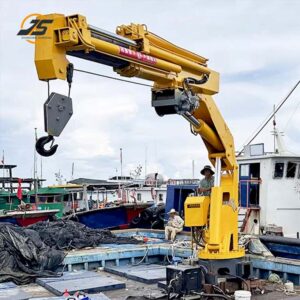
A marine deck crane is a lifting device installed on the deck of a vessel. It is designed for loading and unloading cargo, handling equipment, and supporting marine operations such as towing, mooring, and offshore work. Unlike standard dockside cranes, marine deck cranes are engineered to withstand harsh maritime environments, including saltwater corrosion, vibration, and constant motion.
Marine deck cranes are widely used on fishing boats, supply vessels, research ships, yachts, and offshore platforms. Their compact footprint and flexible operation make them ideal for vessels where space is limited. In many cases, the deck crane is the primary lifting system onboard, and its performance directly affects the vessel’s productivity and safety.
Marine deck cranes are sometimes referred to as ship cranes, deck cranes, or marine cranes. While the terms overlap, the main difference lies in design intent and application. A marine deck crane is typically optimized for deck mounting and marine conditions, while a ship crane may refer to larger, ship-specific lifting systems. Offshore cranes are a separate category designed for heavy-duty, high-reliability operations in open sea conditions.
Main Components of a Marine Crane Explained
Understanding the key components of a marine crane helps you evaluate quality and suitability. Most marine cranes include the following parts:
- Boom and jib structure: The boom provides reach and lifting height, while the jib can extend outreach and improve flexibility.
- Slewing system: This enables rotation and positioning of the load, allowing the crane to operate across a wide area on deck.
- Winch and wire rope: The winch controls lifting and lowering, and the wire rope must be chosen carefully for strength and corrosion resistance.
- Hydraulic power pack: Modern marine deck cranes use hydraulic systems for smooth, powerful lifting. Hydraulic cranes are favored for their control and durability.
- Control system: Depending on the model, control can be manual, electric-hydraulic, or remote-operated. Remote control improves safety by allowing operators to maintain distance from the load.
- Safety devices: Overload protection, limit switches, emergency stop systems, and anti-sway features are essential for safe operation.
These components must be designed to withstand maritime conditions. For example, hydraulic systems should use corrosion-resistant materials, and critical parts should be protected from seawater spray.
Key Specifications to Consider Before Buying a Marine Deck Crane

Selecting a marine deck crane requires a careful evaluation of technical specifications. Below are the most important factors:
Lifting Capacity and Working Radius
The lifting capacity, measured in tons, determines the maximum load the crane can handle. However, capacity decreases as the working radius increases. This is why load charts are essential for safe operation. A crane rated at 5 tons at a short radius may only lift 2 tons at maximum outreach.
Boom Length and Outreach
The boom length affects the working radius and the area the crane can cover. For deck cranes, outreach is critical because it determines whether the crane can safely reach cargo, equipment, or containers without repositioning the vessel.
Slewing Speed and Lifting Speed
These parameters impact operational efficiency. Faster slewing and lifting speeds can improve productivity, but they must be balanced with safety and control. For sensitive operations like lifting a tender on a yacht, precise control is more important than speed.
Operating Environment
Marine deck cranes operate in saltwater, high humidity, and strong winds. Offshore cranes face even more demanding conditions, including waves and extreme weather. Therefore, corrosion protection, waterproof electrical systems, and robust structural design are critical.
Power Source
Most modern marine deck cranes are hydraulic or electric-hydraulic. Hydraulic systems provide strong power and smooth control, making them suitable for most marine applications. Electric-hydraulic cranes can offer higher energy efficiency and easier integration with ship power systems.
How to Read a Marine Deck Crane Load Chart Correctly
Load charts are essential for safe lifting. A load chart shows the crane’s rated capacity at different working radii and boom angles. Understanding how to read it can prevent overload, structural failure, and accidents.
A load chart typically includes:
- Rated load at different radii
- Boom angle and outreach
- Safe working load (SWL) and lifting height
It is important to remember that load charts assume ideal conditions. In real marine operations, vessel motion, wind, and dynamic loading must be considered. Operators should always apply a safety margin and avoid lifting at maximum rated capacity unless conditions are stable.
Marine Deck Crane Safety Standards and Certification
Safety standards ensure that marine deck cranes meet rigorous design and testing requirements. International standards include organizations such as IMO (International Maritime Organization), DNV (Det Norske Veritas), ABS (American Bureau of Shipping), LR (Lloyd’s Register), and BV (Bureau Veritas).
These certifications verify:
- Structural strength and fatigue resistance
- Hydraulic system safety and reliability
- Control system integrity
- Material quality and corrosion protection
For shipowners, compliance is not only a safety issue but also a regulatory requirement. Choosing a certified manufacturer reduces risk and ensures that the crane can pass inspections and audits.
Maintenance Tips to Extend the Life of Your Marine Deck Crane

Maintenance is a key factor in maximizing the lifespan and reliability of a marine deck crane. Regular inspection and upkeep prevent downtime and reduce repair costs. Below are practical maintenance tips:
- Daily inspection: Check wire rope condition, hydraulic oil levels, and safety devices.
- Lubrication: Apply grease to slewing gears, pivot points, and bearings.
- Corrosion prevention: Clean seawater residue and apply protective coatings.
- Hydraulic system care: Replace filters regularly and monitor oil quality.
- Load testing: Periodic load testing confirms performance and safety compliance.
Maintenance also includes training operators and establishing standard operating procedures. A well-maintained deck crane can operate for many years with minimal issues.
Marine Deck Crane vs Offshore Crane: Which One Should You Choose?
While both systems serve lifting purposes, marine deck cranes and offshore cranes are designed for different environments.
Marine deck cranes are ideal for:
- Fishing vessels
- Workboats and supply boats
- Yacht and tender handling
- Harbor operations
Offshore cranes are designed for:
- Heavy lifting in open sea
- Rigging and subsea operations
- High-cycle, high-reliability tasks
Offshore cranes typically have higher capacities, stricter certification requirements, and more robust structural design. For most deck applications, a marine deck crane is more cost-effective and space-efficient.
How to Choose the Right Manufacturer: What You Should Ask Before Buying
Choosing a manufacturer is as important as choosing the crane model. Here are key questions to ask:
- Factory capabilities: Do they have experience producing marine deck cranes and related marine equipment?
- Customization options: Can they provide customized boom length, capacity, and control systems?
- Quality control: Do they conduct in-house testing and provide certification documentation?
- After-sales support: Are spare parts available? Do they offer installation and maintenance services?
- Client references: Can they provide case studies or customer feedback?
As a manufacturer, we emphasize transparent production processes, strict quality control, and responsive after-sales support. These factors ensure that the crane performs reliably and meets operational needs.
Common Problems and Troubleshooting for Marine Deck Cranes

Even well-designed marine deck cranes may face issues due to harsh environments and heavy use. The most common problems include:
- Hydraulic leaks: Often caused by worn seals, damaged hoses, or loose fittings.
- Wire rope slipping or breaking: Usually due to corrosion, improper reeving, or overload.
- Slewing system failure: Caused by worn gears or lack of lubrication.
- Control system malfunction: Electrical issues, water ingress, or damaged sensors.
- Overload alarms: Triggered by exceeding rated capacity or improper load distribution.
Troubleshooting starts with identifying the root cause and applying the correct repair method. Regular maintenance and operator training can significantly reduce these problems.
Table: Typical Marine Deck Crane Specifications (Example)
| Specification | Typical Range | Notes |
|---|---|---|
| Lifting Capacity | 1–20 tons | Common for fishing boats, yachts, and workboats |
| Boom Length | 4–12 meters | Determines outreach and working radius |
| Power Source | Hydraulic / Electric-hydraulic | Hydraulic preferred for smooth control |
| Slewing Angle | 360° | Full rotation for maximum flexibility |
| Material | Marine-grade steel | Corrosion-resistant coating required |
| Control Mode | Manual / Remote / Cabin | Remote control improves safety |
Conclusion
Selecting the right marine deck crane requires a clear understanding of the vessel’s operational needs, working environment, and safety requirements. As a manufacturer, we recommend evaluating lifting capacity, outreach, power systems, and compliance with international standards before making a decision. A well-chosen deck crane improves efficiency, reduces downtime, and enhances safety for shipboard operations.
If you need a reliable marine deck crane solution tailored to your vessel, our factory can provide customized designs, strict quality control, and full support from installation to maintenance. Contact us to discuss your project requirements and receive professional guidance.
FAQ
1. What is a marine deck crane used for?
A marine deck crane is used for lifting and moving cargo, equipment, and supplies on the deck of a vessel. It is commonly installed on fishing boats, workboats, yachts, and offshore vessels.
2. How do I choose the right marine deck crane for my ship?
Choose based on lifting capacity, boom length, working radius, and operating environment. Also consider power type (hydraulic or electric-hydraulic), corrosion protection, and safety features.
3. What is the difference between a marine deck crane and an offshore crane?
A marine deck crane is designed for deck-mounted operations on vessels, while offshore cranes are built for heavy-duty lifting in open sea conditions and often have higher capacity and stricter certification requirements.
4. How often should a marine deck crane be inspected?
Daily inspections are recommended for wire rope, hydraulic system, and safety devices. Periodic inspections and load tests should be performed based on operating hours and regulatory requirements.
5. What safety features should a marine deck crane have?
Key safety features include overload protection, limit switches, emergency stop, anti-sway control, and corrosion-resistant materials to ensure reliable operation in marine environments.
 English
  Russian
  French
  Spanish
  Arabic