

Welcome to My Blog!
Before we dive into the content, if you’re interested in our products or have any questions, please feel free to visit our Contact Us page on the website. Our team is ready to assist you with inquiries, orders, or any support you may need.
Now, let’s get started on our journey together. I hope you find the content here insightful, engaging, and valuable.
Table of Contents
Choosing the right crane boom is one of the most important decisions in any construction project. The crane boom directly affects lifting capacity, reach, safety, and overall efficiency. Whether you are building skyscrapers, bridges, or industrial plants, understanding how to select the ideal crane boom ensures smoother operations and better project outcomes.
This guide explains everything you need to know—from crane boom basics and types to cost, safety, and maintenance considerations.
Understanding What a Crane Boom Is

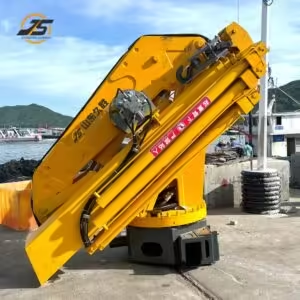
A crane boom is the long, telescoping or fixed arm used to lift and move heavy loads in construction and industrial applications. It acts as the primary lifting component of the crane, providing both reach and leverage.
Definition and Function of a Crane Boom
The boom connects to the crane’s base or rotating platform and extends outward to position the load. By changing its angle or length, operators can control how far and how high the load is lifted.
Key Components of a Crane Boom
Common components include boom sections, pins, hydraulic cylinders, wire ropes, and pulleys. These parts work together to provide structural strength and controlled movement.
Difference Between a Crane Boom and a Jib
While the boom is the main lifting structure, the jib is a smaller, secondary arm that extends from the boom’s end for extra reach. Understanding this distinction helps in choosing the right configuration for different lifting tasks.
Types of Crane Booms Used in Construction
There are several types of crane booms, each designed for specific lifting conditions and operational requirements.
Fixed Crane Boom
A simple, non-adjustable boom ideal for repetitive lifting tasks where the reach doesn’t need to change.
Telescopic Crane Boom
Made of multiple sliding sections powered by hydraulics, this boom can extend or retract quickly—perfect for mobile and truck-mounted cranes.
Lattice Crane Boom
Constructed from high-strength steel trusses, the lattice boom offers exceptional lifting capacity and stability for heavy-duty projects like bridge construction.
Hydraulic Crane Boom
Hydraulic pressure allows for precise movement and quick setup, making this type popular in modern construction equipment.
Comparison of Different Crane Boom Types
Telescopic booms are flexible but heavier, while lattice booms are lighter and more powerful but require assembly. The right choice depends on your project’s scale and mobility needs.
Factors to Consider When Choosing a Crane Boom

Selecting a crane boom involves evaluating several performance and environmental factors.
Lifting Capacity and Boom Length
Determine the maximum weight and height your project demands. A longer boom provides more reach but may reduce lifting capacity.
Working Height and Operating Radius
The crane boom must reach the necessary height without compromising balance or safety.
Site Conditions and Terrain
Rough terrain may require a stronger or shorter boom for better stability.
Load Type and Frequency of Operation
Consider whether you’ll be lifting heavy structural steel, pre-cast concrete, or lighter materials—each may need a different boom configuration.
Matching the Crane Boom Type to Your Project Needs
Each construction environment has unique challenges. Matching your crane boom to your project ensures efficiency and safety.
- Building Construction: Telescopic booms are ideal for urban construction with limited space.
- Bridge or Infrastructure Projects: Lattice booms offer high capacity for long-span lifting.
- High-Rise Construction: Choose a hydraulic boom for precise lifting at tall heights.
- Confined or Urban Areas: A compact telescopic boom mounted on a mobile crane provides maximum flexibility.
Comparing Telescopic vs Lattice Crane Booms

When choosing between telescopic and lattice designs, consider these key differences:
- Strength and Weight: Lattice booms provide greater strength-to-weight ratios.
- Setup Time: Telescopic booms are faster to deploy, while lattice booms require assembly.
- Mobility: Telescopic booms are better for frequent relocation.
- Maintenance and Cost: Lattice booms are cheaper to maintain but require more transport effort.
The decision ultimately depends on your project’s lifting needs, timeline, and mobility requirements.
Safety and Compliance in Crane Boom Selection
Safety is the foundation of crane boom operation.
- Compliance Standards: Ensure your crane boom meets OSHA, ISO, or regional safety regulations.
- Inspection and Certification: Regular inspections prevent fatigue cracks, corrosion, or misalignment.
- Operator Training: Certified operators must understand the boom’s rated capacity and working radius limits.
Choosing a compliant and well-maintained crane boom not only prevents accidents but also protects your investment.
Cost, Maintenance, and Longevity
The cost of a crane boom depends on material, type, brand, and maintenance requirements.
- Initial Cost vs Long-Term Value: A high-quality boom may cost more initially but offers lower lifetime expenses.
- Maintenance Tips: Regular lubrication, corrosion checks, and alignment tests extend service life.
- Replacement and Repair: If deformation or cracks appear, sections can often be repaired or replaced individually.
Proper maintenance ensures consistent performance and helps avoid costly downtime.
Custom and Specialized Crane Booms
Certain industries require tailor-made crane booms for unique applications.
- Custom Fabrication: Some manufacturers offer booms designed to specific dimensions and load requirements.
- Extensions and Modifications: Boom extensions increase reach without changing the main crane structure.
- Offshore and Wind Projects: Specialized high-strength lattice booms are ideal for marine and wind turbine installations.
Where to Buy or Rent the Right Crane Boom
When it’s time to acquire a crane boom, you have several options:
- Top Manufacturers and Suppliers: Look for certified suppliers offering telescopic and lattice options with ISO-approved materials.
- Buying Used: Inspect for signs of wear, corrosion, or weld fatigue before purchase.
- Rental Options: Renting is cost-effective for short-term or seasonal projects.
Request quotes from multiple vendors and compare warranty terms, service support, and delivery timelines.
Final Checklist Before Choosing a Crane Boom

Before making your final decision, go through this quick checklist:
- Define your project’s maximum load and reach requirements.
- Verify the crane’s compatibility with the boom.
- Confirm compliance with local and international standards.
- Check supplier reputation and after-sales service.
- Evaluate total cost of ownership, not just purchase price.
By following these steps, you can confidently choose a crane boom that enhances performance, safety, and value.
Conclusion
Choosing the ideal crane boom requires balancing technical performance, safety, and cost. By understanding different boom types, analyzing site conditions, and ensuring compliance with safety standards, you can select a crane boom that maximizes productivity and reliability in any construction project.
FAQ
What is a crane boom?
A crane boom is the long arm of a crane that lifts and moves heavy loads. It provides the height and reach needed for construction or industrial work and can be fixed, telescopic, lattice, or hydraulic depending on the project’s requirements.
What are the main types of crane booms?
The most common types are fixed, telescopic, lattice, and hydraulic booms. Telescopic booms offer flexibility and quick setup, while lattice booms deliver higher lifting capacity for large-scale projects.
How do I choose the right crane boom?
Select a crane boom based on your project’s lifting capacity, height, working radius, and site conditions. Consider whether you need mobility, quick setup, or heavy-load handling before making your decision.
How often should a crane boom be inspected?
Crane booms should be inspected at least once a year, or more often for heavy-use equipment. Regular checks for cracks, corrosion, and alignment ensure safe and reliable operation.
Can a crane boom be repaired or replaced?
Yes. Many crane booms are designed with modular sections that can be replaced individually. Damaged or corroded parts should be repaired or swapped promptly to maintain performance and safety.
Need Help Choosing the Right Crane Boom?
If you’re unsure which crane boom best fits your construction project, our experts are ready to assist. Contact us today for a personalized consultation and find the ideal solution for your lifting needs. Don’t wait until your next project is delayed—get in touch now to ensure safety, performance, and reliability on every lift!
 English
  Russian
  French
  Spanish
  Arabic