

Welcome to My Blog!
Before we dive into the content, if you’re interested in our products or have any questions, please feel free to visit our Contact Us page on the website. Our team is ready to assist you with inquiries, orders, or any support you may need.
Now, let’s get started on our journey together. I hope you find the content here insightful, engaging, and valuable.
Table of Contents
Crane booms are essential components in various heavy-lifting operations, from construction to offshore drilling. These long, extendable arms allow cranes to reach greater heights and extend further distances, making them indispensable for moving heavy loads safely and efficiently. In this guide, we’ll explore the different types of crane booms, their key features, applications, and essential maintenance tips to ensure optimal performance.
What is a Crane Boom?

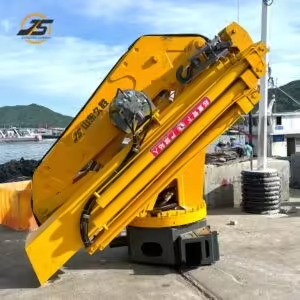
A crane boom is the long, powerful arm attached to a crane that allows it to lift and extend loads. It’s a critical element of cranes used in construction, marine, mining, and heavy industries. The boom’s ability to extend or retract allows it to reach various heights and distances, enabling cranes to handle different types of heavy lifting tasks.
Crane booms come in various configurations, each suited for specific tasks and working environments. They play a crucial role in maximizing the lifting capacity of a crane while enhancing operational efficiency and safety.
Types of Crane Booms: Which One is Right for Your Needs?
There are several types of crane booms, each designed to meet specific operational needs. Let’s take a look at the most common types of crane booms:
Fixed Crane Booms
A fixed crane boom is stationary, with a set length that doesn’t change. These are often used in applications where a high lifting capacity is required within a limited range. Fixed booms are popular in construction and manufacturing environments, where precise, stable lifting is crucial.
Telescopic Crane Booms
Telescopic crane booms are designed to extend and retract, offering flexible reach. They can be extended to various lengths to handle tasks in confined spaces or high structures. These booms are common in construction, demolition, and even offshore operations due to their versatility.
Articulated Crane Booms
Articulated booms have multiple segments connected by joints, allowing the boom to bend and extend. This type is especially useful for reaching over obstacles or in narrow spaces. It’s commonly used for aerial work platforms, where maneuverability is key.
Key Features of a Crane Boom

Understanding the essential features of a crane boom can help operators choose the right equipment for the job. Here are the key aspects to consider:
Lifting Capacity and Reach
The lifting capacity and reach are two of the most critical specifications of a crane boom. The lifting capacity refers to how much weight the boom can safely lift, while the reach determines how far the boom can extend. Choosing a crane boom with the appropriate lifting capacity and reach ensures that the crane can handle the specific tasks required without exceeding safety limits.
Hydraulic Systems in Crane Booms
Hydraulic systems are the backbone of modern crane booms, allowing them to extend and retract with ease. These systems use pressurized fluid to power the boom’s movement. Regular maintenance of the hydraulic system is essential for preventing leaks and ensuring smooth operations.
Materials Used in Crane Booms
Most crane booms are made from high-strength steel or other durable alloys to ensure they can handle the immense weight and force associated with heavy lifting. The choice of materials also affects the weight and stability of the crane. Lightweight booms, such as those made from aluminum alloys, are used in specific applications where mobility is essential.
How Does a Crane Boom Work?
A crane boom works by using hydraulic cylinders or mechanical systems to extend and retract. The hydraulic system creates pressure, which is directed to the cylinders, allowing the boom to move. The crane operator controls the boom’s movements from the cabin, adjusting the length and angle of the boom depending on the task at hand.
The boom’s mechanism is powered by either the crane’s onboard engine or an external power source, and its movements can be fine-tuned for maximum precision during lifting operations. Understanding how the crane boom works is crucial for ensuring its proper use and avoiding accidents on the job site.
Applications of Crane Booms
Crane booms are used across a wide range of industries, each with unique applications that require specific types of booms. Here are some common uses:
Crane Booms in Construction
In construction, crane booms are used to lift heavy materials, such as steel beams, concrete blocks, and other large construction components. The ability to extend and retract the boom makes it ideal for reaching higher elevations and tight spaces. This flexibility is particularly useful on large construction projects where the materials need to be moved to various locations.
Crane Booms in Offshore Operations
Crane booms are widely used in offshore oil rigs and maritime construction, where they handle large loads in difficult marine environments. These booms are designed to resist corrosion and endure harsh conditions, such as high winds and saltwater exposure.
Crane Booms in Industrial and Warehouse Settings
In industrial and warehouse operations, crane booms help with loading and unloading heavy materials. They are often used for moving goods from one level to another, assisting with heavy lifting in environments where forklifts and other machinery might not be suitable.
How to Maintain a Crane Boom for Longevity

Proper maintenance of a crane boom ensures its longevity and operational efficiency. Here are some essential tips:
Regular Inspections and Safety Checks
Regular inspections are crucial to identify any wear and tear or potential safety hazards. During inspections, check for any structural damage, cracks, or corrosion on the boom, especially if it’s used in harsh environments like marine or industrial settings.
Lubrication and Cleaning
Keeping the boom’s moving parts well-lubricated is essential for preventing friction and wear. Cleaning the boom after use helps prevent dirt and debris buildup that can affect performance and lead to premature wear.
Structural Integrity and Welding
Welds and joints should be regularly inspected to ensure that they haven’t weakened. If there’s any sign of structural damage, it’s important to address it immediately to prevent further deterioration or accidents during lifting operations.
Crane Boom Common Problems and Troubleshooting
Crane booms, like any heavy machinery, can face operational challenges. Here are some common problems and troubleshooting tips:
Hydraulic Failures
Hydraulic failures are among the most common issues with crane booms. If the boom isn’t extending or retracting properly, it may be due to a hydraulic fluid leak or a malfunctioning pump. Regularly check hydraulic lines and seals to prevent this issue.
Boom Misalignment and Jamming
Boom misalignment can occur if the boom is exposed to excessive force or if the hydraulic system is not properly maintained. Misalignment can cause the boom to get stuck or jam. Ensure proper maintenance and alignment to prevent this problem.
Wear and Tear on Crane Boom Components
Over time, components such as cables, pins, and hydraulic seals may wear out. Regular replacement of these parts is essential for maintaining the boom’s performance and preventing breakdowns.
Crane Boom Safety Considerations
Safety is paramount when operating a crane boom. Here are a few key safety considerations:
Load Limits and Overloading Risks
Exceeding the boom’s load capacity is one of the most significant risks associated with crane operations. Always adhere to the manufacturer’s specifications to prevent accidents and ensure the boom can handle the load without compromising safety.
Operator Safety Protocols
Operators should be thoroughly trained in safe crane operations, including understanding how to use the crane boom correctly and how to conduct pre-operation safety checks.
Emergency Procedures and Precautions
Establish clear emergency protocols for crane boom malfunctions or accidents. Ensure all operators are familiar with emergency procedures to handle potential risks quickly and safely.
How to Choose the Right Crane Boom for Your Project

Choosing the right crane boom depends on several factors:
Factors to Consider When Selecting a Crane Boom
Consider the weight capacity, reach, and application of the boom. For example, if you’re working in a confined space, an articulated boom might be the best option, while a telescopic boom is ideal for reaching high structures.
Cost vs. Performance
While price is a crucial consideration, it’s important to balance cost with the performance and reliability required for your project. Investing in a high-quality crane boom can save you money in the long run by reducing maintenance and improving operational efficiency.
Consulting with Crane Experts
When in doubt, consult with crane experts to help choose the right crane boom for your project. Their experience and insights can help you make an informed decision based on the specific needs of your operation.
Conclusion
Understanding the various types of crane booms, their features, and how to maintain them is essential for ensuring optimal performance and safety. Whether you’re working in construction, offshore operations, or industrial settings, selecting the right crane boom and adhering to maintenance protocols will ensure a smooth and efficient lifting operation.
FAQ
What is a crane boom?
A crane boom is the long, extendable arm of a crane that is used to lift and move heavy loads. It allows the crane to reach various heights and distances, making it essential for construction, industrial, and offshore operations.
What are the types of crane booms?
The main types of crane booms include fixed booms, telescopic booms, and articulated booms. Fixed booms are stationary, telescopic booms extend and retract, while articulated booms can bend and extend, making them ideal for tight spaces and complex lifting tasks.
How does a crane boom work?
A crane boom works by using hydraulic cylinders to extend or retract, allowing it to lift materials to different heights and distances. The movement is controlled by the crane operator, who adjusts the boom’s angle and reach based on the task.
How to maintain a crane boom?
Regular maintenance of a crane boom includes checking for wear and tear, lubricating moving parts, inspecting the hydraulic system, and ensuring that structural components are intact. Regular inspections prevent breakdowns and extend the boom’s lifespan.
What are common problems with crane booms?
Common issues with crane booms include hydraulic failures, misalignment, and wear on components like cables and pins. Regular maintenance and inspections are crucial to identifying and fixing these issues before they lead to major problems.
Ready to Optimize Your Lifting Operations?
Whether you’re looking to buy, maintain, or upgrade your crane boom, our experts are here to help you choose the best solution for your needs. Contact us today for personalized advice and top-quality crane equipment!
 English
  Russian
  French
  Spanish
  Arabic