
Welcome to My Blog!
Before we dive into the content, if you’re interested in our products or have any questions, please feel free to visit our Contact Us page on the website. Our team is ready to assist you with inquiries, orders, or any support you may need.
Now, let’s get started on our journey together. I hope you find the content here insightful, engaging, and valuable.
Table of Contents
Introduction
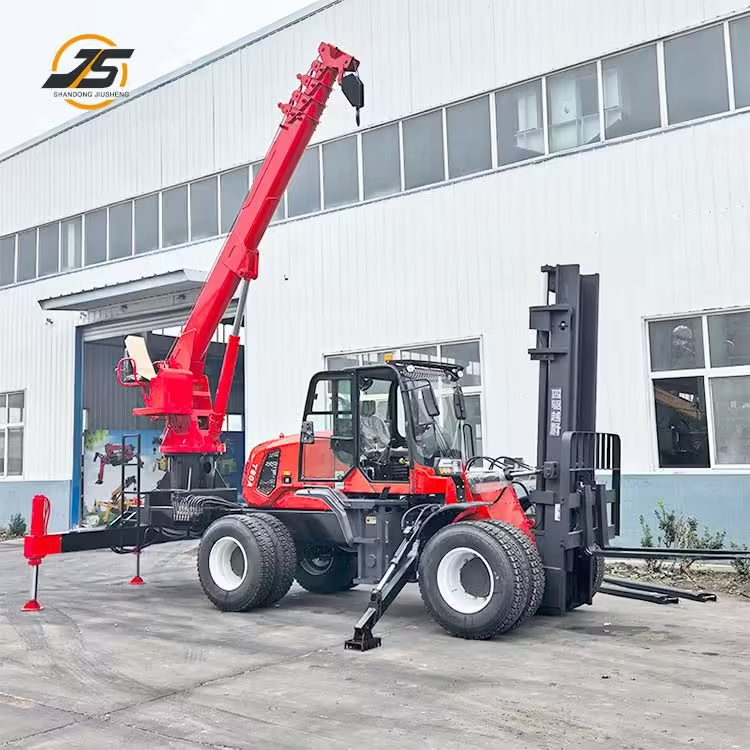
Hoist forklifts are an essential piece of equipment in many industrial and warehouse settings. These specialized machines combine lifting and hoisting functionalities, making them particularly efficient for moving heavy goods over short distances. Hoist forklifts have become a popular choice in warehouses, construction sites, and other industries that require the handling of large and bulky items. They help businesses save time, reduce manual labor, and improve overall efficiency. In this article, we will explore five key benefits of hoist forklifts in warehouses, highlighting their advantages in improving warehouse operations.
Improved Efficiency and Speed in Lifting Heavy Loads
Hoist forklifts are designed to handle heavy lifting with ease, making them highly effective in speeding up operations in a warehouse environment. These forklifts are typically equipped with hoisting mechanisms, which enable them to lift goods vertically and transport them over long distances quickly. In a busy warehouse, the ability to lift and move goods rapidly can significantly enhance operational productivity. This means that tasks like stacking, unloading, and relocating materials can be completed in a fraction of the time, allowing for better use of available resources.
Additionally, hoist forklifts can help warehouses maintain a steady flow of goods, reducing bottlenecks and ensuring that operations run without unnecessary delays. By improving both the speed and efficiency of material handling, hoist forklifts contribute to overall warehouse optimization, ultimately boosting profitability.
Key Points:
- Hoist forklifts save time in lifting heavy loads.
- They reduce the need for additional labor for manual lifting tasks.
- Faster lifting capabilities lead to a more efficient workflow.
Enhanced Safety Features for Workers
Safety is always a top priority in warehouse settings. Hoist forklifts come with advanced safety features that protect both operators and the surrounding environment. Most hoist forklifts are equipped with reinforced lifting arms, stabilizers, and load limiters, all of which help prevent accidents and ensure the safety of both operators and bystanders. These safety mechanisms are crucial in maintaining the stability of the forklift, especially when handling heavy loads, and help prevent the risk of tipping over or dropping the load. Additionally, many hoist forklifts include automatic load sensing systems that alert the operator if the load exceeds the safe weight limit, preventing dangerous situations before they occur.
In addition, hoist forklifts provide operators with better visibility, especially when lifting and hoisting items in high or confined spaces. With clear sightlines and often an elevated cabin or camera systems, operators can monitor their surroundings and the load being lifted more easily, reducing blind spots and improving safety. This enhanced visibility is especially important when maneuvering in tight aisles or stacking items at great heights, where small errors can lead to costly damage or accidents. Proper training for workers can further reduce risks, allowing warehouses to minimize the potential for injury. With proper instruction on safe operating practices, load handling, and emergency response protocols, warehouses can ensure that workers are prepared to handle any situation that may arise, keeping the workplace safe for everyone.
Key Points:
- Hoist forklifts are built with safety mechanisms to prevent accidents.
- Increased visibility helps operators avoid collisions.
- Proper safety training is essential for minimizing risks.
Cost-Effective Solution for Heavy Load Management

One of the most significant advantages of using hoist forklifts is their ability to reduce the need for multiple pieces of equipment. Warehouses often have to rely on several machines for different tasks—one forklift for moving, one crane for hoisting, and perhaps another for stacking. Hoist forklifts, however, combine both functions, allowing businesses to streamline operations and reduce the number of machines required. By integrating lifting, hoisting, and stacking capabilities into a single piece of equipment, hoist forklifts eliminate the need to switch between machines, saving both time and effort.
This consolidation of equipment can lead to long-term cost savings. Fewer machines mean reduced maintenance costs, less space required for equipment storage, and more efficient use of resources. With fewer pieces of machinery, warehouse operators can focus on keeping just one or two machines in peak working condition, instead of managing a larger fleet. In the long run, this can result in substantial cost savings for warehouse owners, including lower repair bills, fewer rental fees for additional equipment, and reduced energy consumption. Additionally, reducing the number of machines can free up valuable warehouse space for storage or other critical operations, further enhancing overall efficiency.
Key Points:
- Hoist forklifts combine lifting and hoisting functions in one machine.
- They reduce the need for additional equipment and save on maintenance costs.
- Businesses can save money in the long term by relying on hoist forklifts.
Versatility in Different Warehouse Environments
Hoist forklifts are incredibly versatile and can be adapted to different types of warehouse environments. Whether it’s for high-rise shelving, outdoor yards, or areas with limited space, hoist forklifts can be used in various situations. Their adaptability makes them an excellent choice for warehouses with diverse operations, from receiving shipments to organizing and storing goods in tight spaces. In environments with narrow aisles or low ceilings, hoist forklifts can adjust lifting heights and maneuver in ways that other forklifts simply cannot, allowing them to access hard-to-reach areas and maximize vertical storage.
The ability to adjust lifting heights and maneuver in confined areas also gives hoist forklifts an edge over other types of forklifts. This flexibility is particularly useful in warehouses with varying load sizes and heights, as hoist forklifts can handle everything from small pallets to larger, bulkier items without the need for specialized equipment. This versatility allows warehouse managers to optimize their operations, regardless of the physical layout of the warehouse. Whether dealing with high-density storage, outdoor work sites, or tight spaces, hoist forklifts help maximize efficiency and streamline workflows across different operational needs. This makes them a valuable asset for warehouses that require multi-functional equipment to keep up with fast-paced demands.
Key Points:
- Hoist forklifts can be used in various warehouse settings.
- Their adaptability allows for efficient movement in confined or high-storage areas.
- Versatility helps optimize workflows across different operational needs.
Reduces Risk of Worker Injury from Manual Lifting

Manual lifting and transporting heavy items can pose significant risks to workers in a warehouse. Injuries such as strains, sprains, and even serious accidents can occur when employees are tasked with lifting heavy loads without proper equipment. Hoist forklifts help reduce the need for manual labor, thus minimizing the risk of injury. By automating the lifting and hoisting process, these forklifts eliminate the physical strain on workers and significantly reduce the likelihood of musculoskeletal injuries, which are common in manual material handling.
Using hoist forklifts allows workers to focus on other tasks, improving their overall efficiency while also reducing the physical strain on their bodies. With the heavy lifting handled by the forklift, employees can concentrate on more specialized work, such as inventory management, quality control, or operating other machinery. As a result, warehouses experience fewer worker compensation claims and downtime due to injuries. Additionally, fewer injuries lead to higher employee morale and retention, as workers are more likely to stay in a safer, more comfortable work environment. Over time, the reduced need for medical expenses and worker absenteeism can lead to significant cost savings for the warehouse, improving its bottom line.
Key Points:
- Hoist forklifts reduce the need for manual lifting, lowering the risk of injury.
- Workers can focus on more efficient tasks, enhancing overall productivity.
- Reduced injuries translate into fewer worker compensation claims.
Comparison Table: Hoist Forklifts vs. Traditional Forklifts
| Feature | Hoist Forklift | Traditional Forklift |
|---|---|---|
| Lifting Capacity | Higher vertical lift capacity | Lower vertical lift capacity |
| Versatility | Can handle hoisting and lifting | Primarily used for lifting |
| Safety Features | Advanced safety mechanisms | Basic safety features |
| Equipment Requirement | Single equipment solution | Multiple machines required |
| Cost Efficiency | Lower long-term costs | Higher long-term costs |
This table compares the key features of industrial lift trucks and traditional forklifts, highlighting the advantages of the former in terms of lifting capacity, safety, and cost efficiency. While traditional forklifts excel at horizontal movement, lift trucks with integrated vertical lifting and hoisting capabilities offer added value by combining both functions in one machine.
Conclusion
Incorporating hoist forklifts into your warehouse operations can offer numerous benefits, from increasing efficiency and reducing labor costs to enhancing safety and reducing the risk of worker injuries. Their versatility, cost-effectiveness, and ability to handle heavy lifting and hoisting tasks make them an indispensable tool in modern warehouse management. Whether you’re running a large distribution center or a small warehouse, hoist forklifts provide a reliable and efficient solution for improving operations.
FAQ
Are hoist forklifts more expensive than standard forklifts?
Although the initial cost of a versatile lift truck may be higher due to its dual functionality, it can provide long-term savings by eliminating the need for additional equipment and reducing maintenance expenses.
Can hoist forklifts be used in small warehouses?
Yes, hoist forklifts are versatile and can be adapted to small spaces. Their ability to lift items vertically and move them over short distances makes them ideal for compact warehouse environments.
How do hoist forklifts improve warehouse safety?
Hoist forklifts come equipped with advanced safety features such as stabilizers, load limiters, and better visibility for operators. These features reduce the likelihood of accidents and improve the safety of workers.
What are the main benefits of using a hoist forklift in a warehouse?
The main benefits include improved efficiency, enhanced safety, cost savings, versatility, and reduced risk of worker injury. Hoist forklifts combine multiple functions into one machine, making them a valuable asset for warehouse operations.
Can hoist forklifts be used outdoors?
Yes, many lift trucks are designed for both indoor and outdoor use, featuring rugged tires and other specialized features that enhance their performance in challenging outdoor environments.
 English
  Russian
  French
  Spanish
  Arabic